
You want to rearrange the living room. Or you need to get behind the TV unit to fix a cable. Or you're moving out and the removalists aren't coming until Thursday but the couch needs to go now. Whatever the reason, you're standing in front of a piece of furniture that weighs three times what you can safely lift, and you need to move it — by yourself.
This is one of those household problems that everyone faces eventually, and most people handle it badly. They drag. They push. They recruit a reluctant partner or neighbour. And somewhere between the grunting, the sore back, and the fresh scratch across the floorboards, they realise there has to be a smarter way.
There is. In this guide, we'll walk you through exactly how to move heavy furniture by yourself — safely, without damage, and without needing to call in favours. We'll cover every type of furniture, every type of floor, the tools that actually work, and the mistakes that send people to the physio or the floor repair shop.
Before You Move Anything: Plan First
The biggest mistake people make when moving heavy furniture isn't using the wrong technique — it's not planning. Five minutes of preparation prevents 90% of the damage, injury, and frustration.
Measure Everything
Before you lift, push, or slide anything, measure the furniture and measure the path. Will the couch fit through the hallway? Will the wardrobe clear the door frame? Can the bed base turn the corner on the landing? A tape measure takes 30 seconds and saves you from getting a 180kg wardrobe wedged in a doorway.
Clear the Route
Remove rugs, shoes, toys, door stops, and anything on the floor between the furniture's current position and its destination. A bunched-up rug under a sliding piece of furniture will stop it dead — and when 200kg of momentum suddenly halts, things tip.
Protect Your Floors
This is non-negotiable. How to move furniture without scratching floors comes down to one rule: never let bare furniture legs or edges make direct contact with the floor while moving. We'll cover specific protection methods below.
Know Your Limits
According to Safe Work Australia, manual handling — including lifting, pushing, and carrying heavy objects — is one of the leading causes of musculoskeletal injury in Australian homes and workplaces. If a piece of furniture is too heavy to control safely solo, use tools designed for the job rather than brute force.
How to Move Heavy Furniture Without Lifting
Here's the truth most people discover too late: you don't actually need to lift heavy furniture to move it. The smartest furniture moving tools are designed around leverage and rolling — not lifting.
Method 1: Furniture Lifter and Roller System
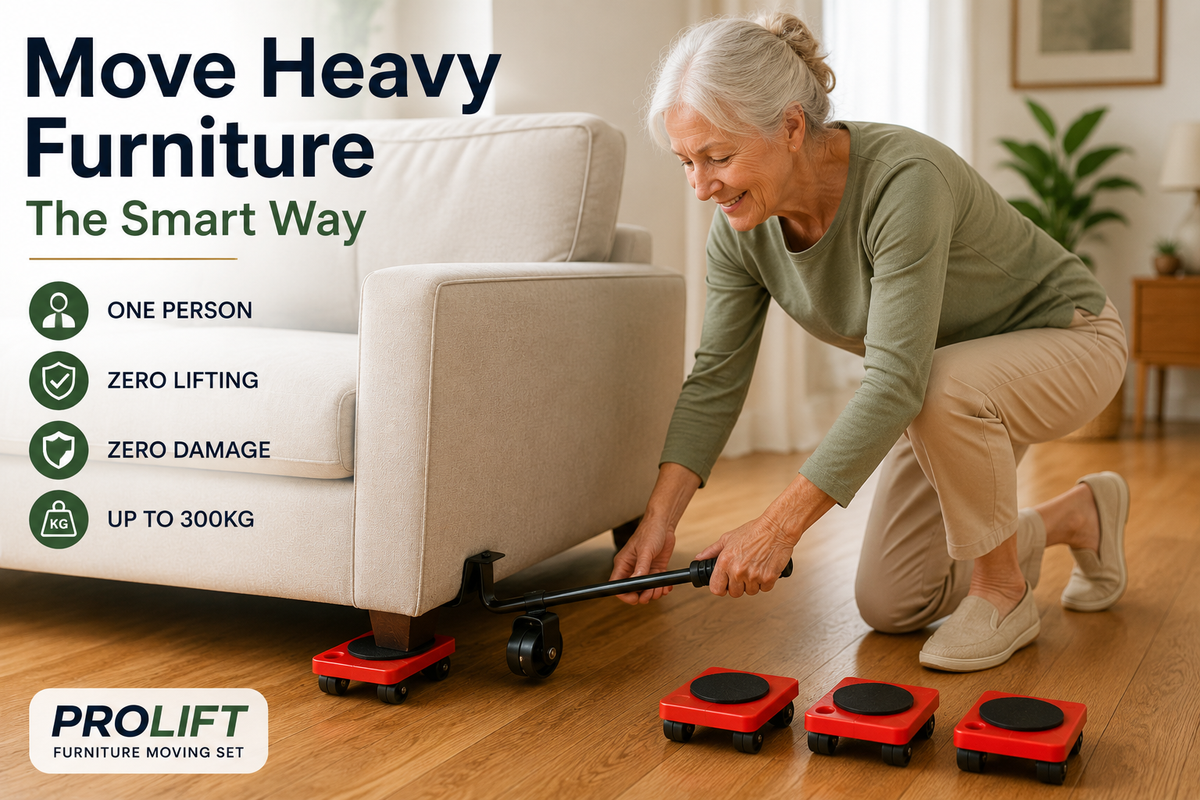
This is the most effective method for DIY furniture moving. A furniture lifter (a steel lever tool) slides under one corner of the furniture. You press down on the handle, and leverage raises that corner 1–2 centimetres off the ground — just enough to slide a wheeled roller pad underneath. Repeat for all four corners, and the furniture glides across the floor on 360-degree castors.
The ProLift Furniture Moving Set from Simplify Australia includes a heavy-duty steel lifter and four roller pads rated for up to 300kg. It's the easy way to move heavy furniture — one person, no lifting, no floor damage.
This method works for:
- Couches, sofas, and recliners
- Bookshelves and display cabinets (even when loaded)
- Beds and bed bases
- Dining tables and desks
- Refrigerators and washing machines
- Wardrobes and dressers
- Entertainment units

Method 2: Furniture Sliders (Felt or Plastic Pads)
Furniture sliders are flat pads placed under each furniture leg or corner. Felt-bottomed sliders work on hard floors (timber, tile, laminate); hard plastic sliders work on carpet. They reduce friction and allow you to push furniture across the floor with significantly less effort.
Sliders are good for lighter items and short distances, but they have limitations. They don't work well on very heavy items (the friction is still significant), they can bunch up on uneven floors, and they offer no lifting capability. For anything over 100kg, a lifter-and-roller system like the ProLift Furniture Moving Set is more effective and safer.
Method 3: Moving Blankets and Towels
Old blankets or towels placed under furniture can help it slide on hard floors, but this is a makeshift solution with drawbacks. Blankets bunch, fold, and provide inconsistent friction. There's no steering control, and on anything heavy, you're still working hard to push. Use this as a last resort — not a primary method.
How to Move Specific Pieces of Furniture
Different furniture presents different challenges. Here's how to approach each type:
How to Move a Heavy Sofa
How to move a heavy sofa is the most common furniture-moving question in Australia — and for good reason. Couches are heavy, bulky, and awkward.
Solo method: Use a furniture lifter to raise each corner and slide rollers underneath. Once all four corners are on rollers, the couch glides with one hand. Steer carefully through doorways — the couch may need to be angled. If moving to another room, ensure the path is clear and doorways are wide enough.
Through a tight doorway: If the sofa won't fit straight through, try tilting it on its side (backrest vertical) and sliding it through. Remove cushions first to reduce bulk.
How to Move a Couch by Yourself
How to move a couch by yourself requires the same approach as above — the key is having a tool that eliminates the need for a second person. A lifter-and-roller system makes solo couch moving completely feasible. Without one, you're stuck dragging — which damages floors and risks back injury.
How to Move a Bed by Yourself
How to move a bed by yourself depends on the bed type:
- Ensemble base: Heavy but flat-bottomed — ideal for rollers. Lift each corner, slide rollers under, and glide into position.
- Timber or metal frame: Remove the mattress first. Then use the lifter on each frame corner. The lighter weight (without the mattress) makes this straightforward.
- King or queen mattress: Stand the mattress upright on its side and walk it to its new position. A mattress bag or old sheet helps protect it and gives you a grip.
How to Move a Wardrobe
How to move a wardrobe is one of the most intimidating solo tasks because of the height and weight. The key is lowering the centre of gravity:
- Empty the wardrobe completely — shelves, drawers, hanging clothes, everything.
- Remove doors if possible (most wardrobe doors lift off hinges).
- Use the furniture lifter on each corner and slide rollers underneath.
- Push slowly and carefully. An empty wardrobe on rollers moves easily, but it's top-heavy — avoid sudden direction changes.
How to Move Heavy Appliances
How to move heavy appliances like fridges and washing machines follows the same lifter-and-roller principle. For appliances you need to move regularly (cleaning behind the fridge, accessing washing machine hoses), consider installing permanent appliance rollers like the ProRoll Appliance Roller Set — roll the appliance out and back any time with one hand.
How to Protect Every Floor Type When Moving Furniture
How to move furniture without damaging floors depends on what type of floor you have:
Timber and Hardwood Floors
The most vulnerable surface. Bare furniture legs — even small ones — can leave deep scratches, gouges, and dents in timber. The ProLift Furniture Moving Set uses non-marking roller pads specifically designed to glide on timber without leaving marks. Never drag anything on hardwood — always lift onto rollers or sliders first.
Laminate Floors
Laminate is more scratch-resistant than hardwood but not scratch-proof. Heavy items dragged across laminate can scuff the surface layer and damage the click-lock joins between planks. Use rollers or felt-bottomed sliders.
Tile Floors
Tiles themselves are hard-wearing, but the grout lines between tiles can catch furniture legs and create uneven drag. Heavy dragging on tiles can also crack individual tiles — especially near edges. Rollers glide smoothly over tile and distribute weight evenly.
Vinyl and Linoleum
Soft flooring surfaces are easily gouged, cut, and permanently marked by dragging. Even rubber-tipped furniture legs can leave black marks. Rollers are the safest method — they distribute weight and glide without marking.
Carpet
Carpet is the most forgiving surface, but heavy furniture can still leave deep compression marks and make dragging extremely difficult (high friction). Hard-bottomed sliders or rollers work best on carpet — felt sliders are less effective here because the felt grips the carpet pile.
The universal rule for every floor type: protect floors when moving furniture by never allowing direct contact between bare furniture and the floor during movement. Lift onto rollers, then glide.
7 Furniture Moving Tips the Professionals Use
These are the techniques removalists and professional movers use daily:
1. Empty Before Moving
Remove drawers, shelves, books, and contents before moving any piece of furniture. Lighter furniture is safer, easier to control, and less likely to tip.
2. Use Leverage, Not Muscle
The ProLift lifter works on leverage — a small amount of force on the handle translates into a significant lifting force at the base. This is smarter (and safer) than deadlifting a 150kg bookshelf.
3. Go Low and Slow
Keep your centre of gravity low when guiding furniture. Move slowly and deliberately. Rushing is when things tip, scratch, and break.
4. Wrap Sharp Corners
If moving furniture through doorways or tight hallways, wrap the corners with old towels or moving blankets. One bump against a door frame can chip paint, crack timber, or dent plasterboard.
5. Remove Doors From Hinges
If a piece of furniture barely fits through a doorway, take the door off its hinges. It adds 5cm of clearance and removes the risk of the door swinging shut mid-move.
6. Use the "L" Technique for Doorways
When a long item (sofa, mattress, table) won't fit through a doorway straight, stand it upright and feed one end through first, then rotate the other end through — creating an "L" shape as you navigate the frame.
7. Photograph Before You Start
Take a photo of the furniture's starting position and the surrounding area. This gives you a reference if you need to move it back, and documents the condition of floors and walls in case of any damage disputes (especially useful for renters).

The Cost of Getting It Wrong
Moving heavy furniture without the right tools or technique carries real costs:
Floor repairs: A single scratch on hardwood flooring can cost $150–$400 to repair, depending on the length, depth, and finish. Multiple scratches from a dragged couch can push that into the thousands.
Bond loss: According to tenancy legislation across Australian states, tenants are responsible for damage beyond fair wear and tear. Scratched floors from furniture moving is one of the most common reasons for bond deductions.
Injury: Safe Work Australia data shows that manual handling injuries — including those from lifting and moving heavy objects — are among the most common musculoskeletal injuries in the country. A back injury from moving a wardrobe can take weeks or months to recover from.
Furniture damage: Dragging, tipping, or dropping furniture damages the piece itself — broken legs, split joins, cracked panels, and torn upholstery.
A set of furniture moving equipment like the ProLift Furniture Moving Set costs a fraction of any one of these repairs — and it's reusable for life.

Browse Our Full Range of Home Products
The ProLift Furniture Moving Set pairs with our other home products for a complete household toolkit:
- ProRoll Appliance Roller Set — permanent rollers under your fridge and washing machine
- TurboClean 9-in-1 Cordless Spin Scrubber — clean bathrooms, tiles, and grout in minutes
- ProDust Ceiling Fan Cleaner — clean every fan blade without a ladder
- DustPro Blind Cleaner — clean both sides of every blind slat in one pass
- ProHook Stainless Steel Suction Hooks — damage-free hooks for bathrooms and kitchens
- ProHeat Rollable Food Warming Mat — keep every dish at serving temperature
- ProCloud Australian Wool Pillow — temperature-regulating natural wool for better sleep
👉 Browse Australia's Leading Home & Travel Products
👉 Visit the Simplify Australia Homepage
Ready to Move Furniture the Smart Way?
Stop dragging. Stop risking your back and your floors. The ProLift Furniture Moving Set lets one person move couches, wardrobes, beds, bookshelves, and appliances up to 300kg — without lifting, without scratching, and without calling for help.
Shop the ProLift Furniture Moving Set Now →
Or explore our full range of clever home products at Simplify Australia.
Sources:
- Safe Work Australia — Manual Handling — Data on musculoskeletal injuries from lifting and moving heavy objects in Australian homes and workplaces.



Leave a comment
This site is protected by hCaptcha and the hCaptcha Privacy Policy and Terms of Service apply.