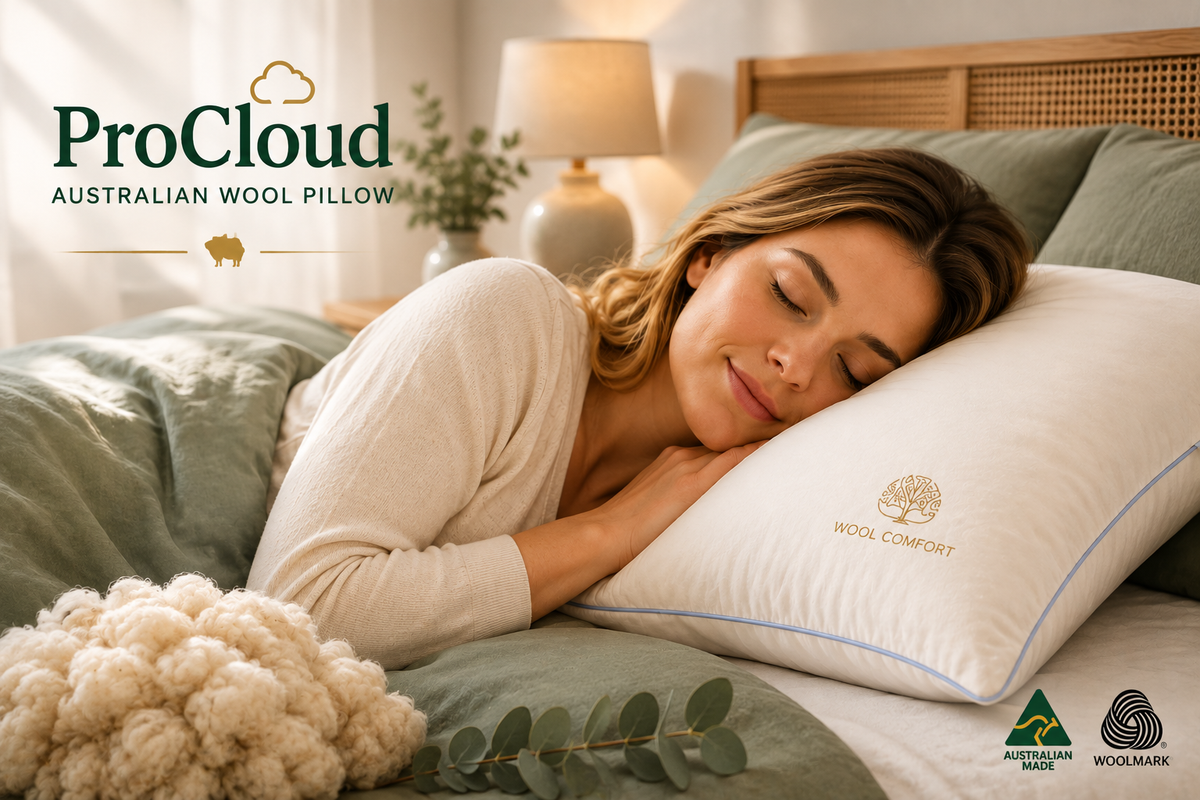
You spend roughly a third of your life with your head on a pillow. That's over 2,500 hours a year resting on whatever material you chose — or more likely, whatever came bundled in a two-pack at the department store. And if that pillow is synthetic polyester, memory foam, or cheap microfibre, you're probably familiar with at least one of these problems: waking up hot and sweaty, flattened fill that needs constant fluffing, neck pain from unsupportive loft, or that chemical smell that takes weeks to off-gas.
Here's the thing — Australians produce some of the finest wool in the world, and that same wool makes an extraordinary pillow fill. A wool pillow naturally regulates temperature, wicks moisture, resists dust mites, and maintains its loft far longer than any synthetic alternative. It's not a new idea — wool has been used in bedding for centuries — but a new generation of Australian wool pillows is bringing this natural material back into the spotlight.
In this guide, we'll cover exactly why wool outperforms synthetic fills, what to look for when buying a wool pillow, how to care for it, and why the ProCloud Australian Wool Pillow from Simplify Australia delivers the best sleep of any pillow we've ever stocked.
The Problem With Synthetic Pillows
Most pillows sold in Australia are filled with polyester fibre, memory foam, or gel-infused foam. They're cheap to manufacture, easy to package, and feel comfortable for about six months — then the problems begin.
They Sleep Hot
Memory foam and synthetic fills trap body heat. Your head generates significant warmth throughout the night, and if that heat has nowhere to go, your pillow becomes a heat sink. You flip to the cool side, and within minutes it's warm again. According to the Sleep Health Foundation, temperature is one of the most important factors affecting sleep quality — and overheating is one of the most common causes of disrupted sleep among Australian adults.
A breathable pillow made from natural wool actively regulates temperature. Wool fibres absorb and release moisture vapour, creating an evaporative cooling effect that keeps the pillow surface at a comfortable temperature all night.
They Go Flat
Synthetic fibres compress under repeated use. Within 6–12 months, most polyester pillows have lost significant loft — the fill packs down, clumps to one side, or simply stops bouncing back. You end up folding the pillow in half or stacking two together to get adequate height. A wool filled pillow maintains its loft naturally because wool fibres have a crimped, spring-like structure that resists compression.
They Harbour Dust Mites
Synthetic fibres create a warm, moist microenvironment that dust mites thrive in. Dust mite allergen is one of the most common triggers for asthma and allergic rhinitis in Australia, according to the National Asthma Council Australia. Wool, by contrast, naturally resists dust mites — the lanolin in wool fibres and the drier microenvironment it creates make it inhospitable to mite populations.
They Off-Gas Chemicals
Memory foam pillows in particular can release volatile organic compounds (VOCs) when new — that chemical smell you notice when you unpack them. While levels are generally considered low, many health-conscious Australians prefer to avoid synthetic chemical exposure during sleep entirely. A natural pillow made from wool has no chemical off-gassing.
Why Wool Is the Best Natural Pillow Fill
Wool has properties that no synthetic material can replicate — because they're built into the fibre at a molecular level.
Temperature Regulation
Wool is the original temperature regulating pillow fill. Each wool fibre can absorb up to 30% of its own weight in moisture vapour without feeling damp. As your body releases heat and perspiration overnight, the wool absorbs that moisture and releases it as vapour, creating a natural cooling effect. In cooler weather, the insulating air pockets between the crimped fibres retain warmth. The result is a pillow that keeps you cool in summer and warm in winter — automatically, without gel pads, cooling covers, or any technology.
Moisture Wicking
Australians sweat during sleep — particularly in Queensland, the Northern Territory, and during summer months across the country. A synthetic pillow traps that moisture against your face and neck, creating discomfort, disrupted sleep, and accelerated bacterial growth. Wool wicks moisture away from the skin and disperses it throughout the fill, where it evaporates. You stay drier, and the pillow stays fresher.
Dust Mite Resistance
Wool's natural resistance to dust mites makes a hypoallergenic wool pillow a genuine alternative for allergy sufferers. The lanolin in wool, combined with the drier microenvironment it creates (dust mites need humidity above 50% to thrive), makes wool fill significantly less hospitable to mite populations than synthetic polyester or even feather and down.
Natural Resilience and Loft
Each wool fibre has a natural crimp — a built-in wave pattern that acts like a tiny spring. This crimp gives wool fill its bounce and resilience. When you compress a wool pillow, the fibres spring back rather than packing flat like synthetic fill. This means the pillow maintains consistent loft and support over years of use, not months.
Sustainability
Wool is a renewable, biodegradable fibre. Australian sheep produce a new fleece every year, and at the end of its life, a wool pillow decomposes naturally — unlike synthetic fills that sit in landfill for decades. An eco friendly pillow made from Australian wool is one of the most sustainable bedding choices you can make.

Australian Wool: Why Origin Matters
Not all wool is equal. Australian wool — particularly Merino wool — is recognised globally as the finest quality wool available. Here's why origin matters when choosing a wool pillow:
Fibre Fineness
Australian Merino wool fibres are finer than almost any other wool in the world — often under 20 microns in diameter. Finer fibres create a softer, more comfortable fill that feels plush against the skin rather than coarse or scratchy.
Climate and Quality
Australia's diverse climate produces wool with exceptional crimp, strength, and resilience. The fibre quality is a direct result of breeding, land management, and climate conditions that have been refined over more than two centuries of Australian wool production.
Industry Standards
Australian wool production operates under strict animal welfare and environmental standards. Choosing an australian made wool pillow supports local industry and ensures the wool meets quality and ethical benchmarks that imported wool may not.
The ProCloud Australian Wool Pillow uses premium Australian wool — sourced locally, processed to bedding-grade standards, and engineered for sleep performance.
Which Sleeping Position Is a Wool Pillow Best For?
One of the most common questions about wool pillows is whether they suit a specific sleeping style. The answer: yes — to all of them.
Side Sleepers
A wool pillow for side sleepers needs adequate loft to fill the gap between your shoulder and head, keeping your spine aligned. Wool's natural resilience maintains consistent height throughout the night — unlike synthetic fills that compress and leave your head dropping toward the mattress by morning. The ProCloud's loft is designed to support the head and neck in a neutral position for side sleeping.
Back Sleepers
Back sleepers need moderate loft that supports the natural curve of the cervical spine without pushing the head forward. A wool pillow for neck support provides this by conforming gently to the shape of the head and neck while maintaining enough structure to prevent sinking.
Hot Sleepers
If overheating is your primary sleep issue, a wool pillow for hot sleepers is the most effective natural solution. Wool's moisture-wicking and temperature-regulating properties outperform memory foam, gel-infused foam, and synthetic fills in every independent test. No cooling gel pad required — the wool does the work naturally.
Stomach Sleepers
Stomach sleepers need a lower-loft pillow to prevent neck hyperextension. Wool pillows can be adjusted — some allow you to remove fill to reduce height. The key advantage is that even at a lower loft, wool still provides temperature regulation and moisture wicking that synthetic alternatives don't.

How to Care for Your Wool Pillow
A quality wool pillow requires less maintenance than most people expect:
Regular Airing
Once a week (or whenever you change sheets), remove the pillow from its case and let it air for a few hours in a well-ventilated area. Sunlight is a natural sanitiser for wool — an hour in indirect sunlight freshens the fill and reduces moisture.
Spot Cleaning
For small spills or marks, spot clean with a damp cloth and mild detergent. Don't saturate the wool fill — surface cleaning is usually sufficient.
Machine Washing (If Applicable)
Some wool pillows — including the ProCloud Australian Wool Pillow — are designed to be a washable wool pillow. Use a gentle cycle, cold water, and a wool-specific or mild liquid detergent. No bleach, no fabric softener. Dry flat or tumble on low.
Pillow Protector
Using a pillow protector between the pillow and your pillowcase extends the life of the fill by reducing direct exposure to sweat, oils, and skin cells. Choose a breathable, natural-fibre protector so it doesn't negate the wool's temperature-regulating benefits.
Lifespan
A well-maintained pure wool pillow can last 5–10 years — significantly longer than the 1–2 year lifespan of a typical synthetic pillow. The natural resilience of wool fibres means the fill maintains its structure and performance far longer than polyester.
5 Common Pillow Mistakes That Ruin Your Sleep
Mistake 1: Keeping Pillows Too Long
Most synthetic pillows should be replaced every 12–18 months. After that, they've lost loft, accumulated dust mites, and absorbed enough body oils and sweat to affect hygiene. A natural wool pillow lasts significantly longer, but even wool pillows should be assessed annually for loft and support.
Mistake 2: Using the Wrong Pillow for Your Sleep Position
A pillow that's too high for a back sleeper or too flat for a side sleeper creates neck misalignment that leads to stiffness and pain. Match your pillow loft to your dominant sleeping position — and choose a material like wool that maintains that loft consistently.
Mistake 3: Ignoring Temperature
If you wake up hot, sweaty, or frequently flipping the pillow to the cool side, your pillow is failing at temperature regulation. Switching to a breathable pillow made from wool solves this without gels, cooling covers, or other add-ons.
Mistake 4: Stacking Two Flat Pillows
This is a sign your pillow has lost its loft and needs replacing — not propping up. Two stacked pillows create an unstable, uneven sleeping surface that can worsen neck pain. One quality pillow with proper loft is always better than two dead ones.
Mistake 5: Never Washing or Airing the Pillow
Pillows accumulate dead skin, sweat, dust mites, and oils over time. Even with a pillowcase, the fill gets contaminated. Regular airing and periodic washing keep your pillow hygienic — and a washable wool pillow makes this easy.
Who Is Switching to Australian Wool Pillows?
The ProCloud Australian Wool Pillow appeals to Australians who care about sleep quality, sustainability, and natural materials:
- Hot sleepers who are tired of waking up sweaty on memory foam or synthetic pillows
- Allergy sufferers looking for a hypoallergenic wool pillow that naturally resists dust mites
- Eco-conscious buyers who want an eco friendly pillow made from renewable, biodegradable Australian wool
- People with neck or shoulder pain who need consistent support from a wool pillow for neck support
- Parents looking for natural, chemical-free pillows for themselves or their children
- Side sleepers who need a pillow that maintains loft all night without flattening
- Quality-over-quantity buyers who'd rather invest in one pillow that lasts 5–10 years than replace cheap synthetics annually
What Makes the ProCloud the Best Australian Wool Pillow?
We stock a wide range of home and lifestyle products at Simplify Australia, and the ProCloud Australian Wool Pillow has quickly become one of our highest-rated products:
- Premium Australian wool fill — locally sourced, fine-fibre wool for superior softness and resilience
- Natural temperature regulation — stays cool in summer, warm in winter, all night
- Hypoallergenic — naturally resistant to dust mites and mould
- Maintains loft for years — wool's crimped fibre structure resists compression
- Machine washable — easy care for long-lasting freshness
- Chemical-free — no off-gassing, no synthetic treatments, no VOCs
- Suitable for all sleeping positions — side, back, stomach, and combination sleepers

Browse Our Full Range of Home & Sleep Products
The ProCloud Australian Wool Pillow pairs beautifully with our other sleep and home products:
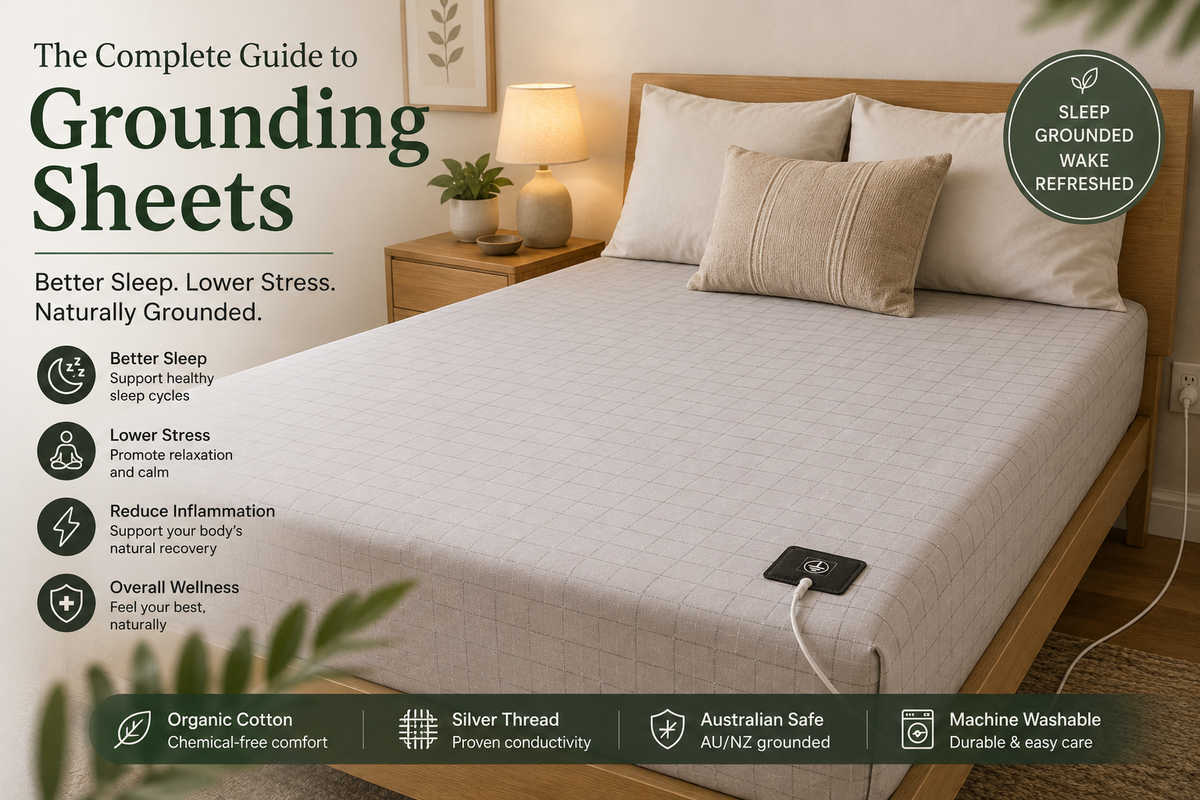
- EarthEase Organic Grounding Sheet — sleep grounded with silver thread and organic cotton
- FastDry Drying Towel — ultra-fast drying microfibre towel for bathroom and travel
- ProChef Titanium Cutting Board — the safest, most hygienic cutting board you can own
- ProHeat Rollable Food Warming Mat — keep every dish at serving temperature
- TurboClean 9-in-1 Cordless Spin Scrubber — clean bathrooms, tiles, and grout in minutes
- ProLift Furniture Moving Set — move heavy furniture solo without scratching floors
👉 Browse Australia's Leading Home & Travel Products
👉 Visit the Simplify Australia Homepage
Ready to Sleep on Australia's Finest Wool?
No more waking up hot. No more flat, lifeless pillows. No more synthetic chemicals against your face all night. The ProCloud Australian Wool Pillow gives you the temperature regulation, natural support, and lasting comfort that only premium Australian wool can deliver.
Shop the ProCloud Australian Wool Pillow Now →
Or explore our full range at Simplify Australia.
Sources:
- Sleep Health Foundation — Research on temperature as a key factor in sleep quality and the impact of overheating on sleep disruption.
- National Asthma Council Australia — Dust mite allergen as a common trigger for asthma and allergic rhinitis, and the role of bedding materials in mite resistance.


Leave a comment
This site is protected by hCaptcha and the hCaptcha Privacy Policy and Terms of Service apply.