
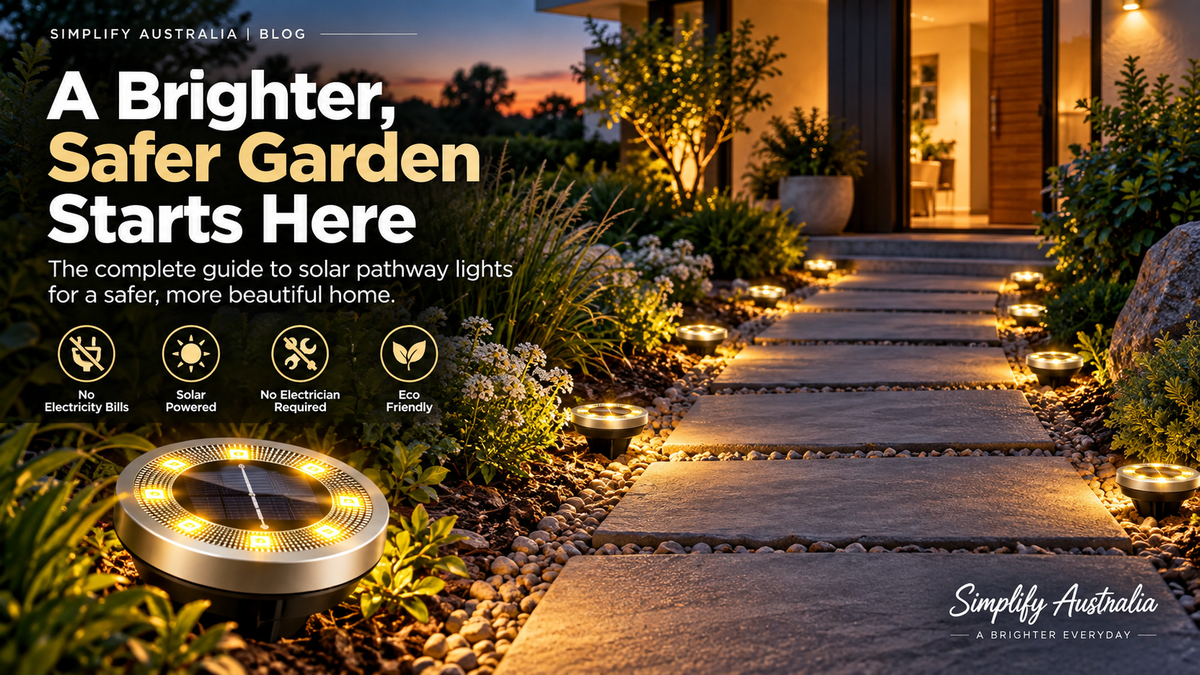
A dark garden pathway is an accident waiting to happen. Uneven pavers, tree roots, garden edges, steps you forgot were there — it only takes one misplaced step to turn a walk to the car or the clothesline into a twisted ankle or a hard fall.
But wiring up outdoor lighting has always felt like overkill. Hiring an electrician, trenching cables, connecting transformers, running conduit — it's hundreds of dollars and a weekend of disruption for what should be a simple problem: you just want to see where you're walking after sunset.
That's exactly what solar pathway lights are built for. No wiring, no electrician, no power bill. Push them into the ground along your path, let them charge in the sun, and they automatically illuminate at dusk — every single night.
In this guide, we'll cover everything you need to know about solar ground lights, including how they work, where to place them, how to get maximum brightness, the mistakes that cause dim or dead lights, and why the NightPath Solar Garden Ground Lights from Simplify Australia have become one of our best-selling outdoor products.
Why Solar Pathway Lights Are the Smartest Way to Light Your Garden
Hardwired garden lighting has its place — large properties, commercial landscapes, and high-output security lighting still benefit from mains power. But for the vast majority of Australian homeowners who simply want to light a path, define a border, or illuminate a driveway, solar path lights are the better choice in almost every way.
No Electrician, No Wiring, No Trenching
Installing hardwired garden pathway lighting means hiring a licensed electrician ($80–$120/hour), trenching cable runs through garden beds, and connecting to a transformer or switchboard. Solar garden path lights require nothing — push the stake into the ground and you're done. Total installation time per light: about 10 seconds.
Zero Running Costs
Solar lights are powered entirely by sunlight. There's no electricity draw, no ongoing cost, and no impact on your power bill. According to the Australian Government's Energy Rating website, lighting accounts for a meaningful portion of household energy use — switching outdoor lights to solar removes that contribution entirely.
Automatic Operation
Modern solar LED pathway lights include a built-in photocell sensor that detects ambient light levels. They switch on automatically at dusk and off at dawn — no timers, no switches, no forgetting to turn them on before guests arrive.
Safe for Every Garden
No mains electricity running through the ground means no shock risk from damaged cables, flooded conduit, or faulty connections. Solar ground lights outdoor installations are inherently safe — critical in gardens where children play, pets dig, and gardeners work with tools near ground level.
Fully Repositionable
Redesigning the garden? Extending the path? Hosting a party and need light in a different spot? Pull the stake out, move it, push it back in. No cable routing, no electrician callback. Solar lights for pathways go wherever you need them, whenever you need them.
How Do Solar Ground Lights Work?
The technology behind solar ground lights is straightforward and reliable:
During the day: A photovoltaic solar panel on the top of each light absorbs sunlight and converts it into electrical energy. This energy is stored in a built-in rechargeable battery — typically a NiMH or lithium-ion cell.
At dusk: An integrated light sensor detects the drop in ambient light and automatically switches on the LED. The LED draws power from the charged battery, producing a warm or cool white glow depending on the light's colour temperature.
Through the night: The LED illuminates continuously (or in some models, switches between brightness modes) for 6–12 hours depending on the battery capacity and how much sunlight the panel received during the day.
At dawn: The sensor detects increasing daylight and switches the LED off. The solar panel begins charging the battery again for the next night.
The NightPath Solar Garden Ground Lights use high-efficiency solar cells and long-lasting LEDs to deliver consistent, reliable illumination night after night — with zero intervention after installation.

Where to Install Solar Pathway Lights
Solar pathway lights are versatile enough for almost any outdoor area. Here's where they work best:
Garden Paths and Walkways
The primary use case. Line both sides of a garden path with solar path lights outdoor to define the edges and provide safe visibility after dark. Space lights 1.5–2 metres apart for a consistent, even glow along the full length of the path.
Driveways
Solar driveway lights along the edges of a driveway help drivers see the boundaries after dark — especially useful on unfenced rural properties, curved driveways, or driveways without kerbing. Ground-flush or low-profile designs work best here to avoid being clipped by car tyres.
Front Garden and Entrance
Solar lights for front garden areas create kerb appeal and a welcoming entrance. Line the path from the street to the front door with evenly spaced ground lights — it's one of the simplest upgrades you can make to a home's evening presentation.
Backyard and Entertaining Areas
Solar lights for backyard spaces define zones and add ambiance. Use them to border a patio, line a garden bed adjacent to a deck, or mark the transition from lawn to garden. They provide enough light for atmosphere without overwhelming outdoor dining settings.
Steps and Level Changes
Anywhere the ground level changes — steps, retaining wall edges, ramp borders — is a safety-critical area that benefits from illumination. Position solar ground lights at the top and bottom of steps and at any transition point.
Pool and Water Feature Surrounds
Low-profile waterproof solar pathway lights are ideal around pools, ponds, and water features where electrical safety is paramount. No mains electricity near water — just solar-powered LEDs with weatherproof housings.
Garden Bed Borders
Use solar ground lights to define the edge between lawn and garden bed. This serves a dual purpose: decorative border lighting at night and a visible edge marker that prevents accidental mowing or trampling of garden beds.
Step-by-Step: How to Install Solar Pathway Lights
Here's how to get professional-looking results from the NightPath Solar Garden Ground Lights:
Step 1: Plan Your Layout
Before pushing anything into the ground, walk the path and decide where each light will go. Mark positions with small sticks or stones. Aim for even spacing — typically 1.5–2 metres apart — and alternate sides (staggered) for a natural look, or place lights directly opposite each other for a formal, symmetrical effect.
Step 2: Check Sun Exposure
Each light's solar panel needs direct sunlight for 6–8 hours daily. Walk the path at midday and note which spots are shaded by trees, fences, buildings, or structures. Avoid placing lights in positions where the panel will be shaded — even partial shade significantly reduces charging.
Step 3: Install the Stakes
Push each light's ground stake firmly into the soil at your marked positions. For hard or rocky ground, pre-drill a hole with a screwdriver or metal rod to avoid damaging the stake. Ensure each light sits straight and level.
Step 4: Orient Panels North
In Australia, north-facing surfaces receive the most sunlight throughout the year. If the solar panel is angled or adjustable, orient it toward the north for maximum charging efficiency.
Step 5: Allow a Full First Charge
Leave the lights in the sun for a full day before expecting peak performance. The initial charge builds the battery to full capacity and establishes a strong charge-discharge cycle.
Step 6: Test at Night
After the first charge, check the lights at dusk. Walk the path and assess brightness, spacing, and coverage. Adjust positioning if any lights are too dim (likely a shade issue) or if gaps between lights leave dark spots.

How to Light a Driveway Without Electricity
One of the most common questions homeowners ask is how to light a driveway without electricity — and solar ground lights are the definitive answer.
A typical driveway lighting project with hardwired fixtures involves:
- Licensed electrician ($200–$500+)
- Trenching and cable routing ($150–$300)
- Transformer and wiring materials ($100–$200)
- Fixtures themselves ($50–$150 each)
- Ongoing electricity costs
Solar driveway lights eliminate every one of those costs. The NightPath lights push into the ground along the driveway edges, charge from the sun, and illuminate automatically at dusk. Total cost: the lights themselves. Total ongoing cost: zero.
For longer driveways (rural properties, acreage), solar is often the only practical option — running mains cable 50+ metres from the house to the property entrance is expensive and disruptive. Solar lights for driveway use solve this completely.
6 Common Mistakes With Solar Pathway Lights
Mistake 1: Placing in Shade
The number-one cause of dim solar lights. Even one hour of direct shade during peak sun (10am–2pm) can reduce charging by 30–40%. Position every panel in full, unobstructed sunlight.
Mistake 2: Spacing Too Far Apart
Lights spaced more than 2.5 metres apart leave dark gaps between pools of light, defeating the purpose of pathway illumination. Keep spacing to 1.5–2 metres for continuous coverage.
Mistake 3: Not Cleaning Panels
Dust, pollen, fallen leaves, sprinkler splash, and bird droppings accumulate on solar panels and reduce efficiency. Wipe panels with a damp cloth every 2–4 weeks.
Mistake 4: Ignoring Seasonal Angle Changes
The sun's angle changes between summer and winter. A panel position that gets full sun in December might be partially shaded by a fence or tree in June. Check panel exposure at different times of year and adjust positioning if needed.
Mistake 5: Installing in Flood-Prone Areas
While most quality solar ground lights are weatherproof, prolonged submersion in standing water can damage electronics. Avoid positioning lights in areas that pool with water after rain. Look for an IP65 or higher waterproof solar pathway lights rating.
Mistake 6: Forgetting Battery Replacement
Rechargeable batteries in solar lights degrade after 2–3 years of daily cycling. If brightness drops despite clean panels and good sun exposure, the battery needs replacing — not the whole light.
What Makes the NightPath the Best Solar Pathway Light in Australia?
We carry a wide range of outdoor and home products at Simplify Australia, and the NightPath Solar Garden Ground Lights stand out for reliable performance:
- High-efficiency solar panel — charges fully in Australian sunlight conditions
- Long-lasting LED — consistent warm glow rated for tens of thousands of hours
- Weatherproof construction — built to handle Australian conditions including rain, heat, and humidity
- Auto on/off sensor — activates at dusk, deactivates at dawn, zero manual operation
- Easy ground stake installation — push into soil in seconds, no tools needed
- Rechargeable battery — built-in battery stores enough charge for extended overnight illumination
Whether you're searching for solar pathway lights, solar ground lights, solar driveway lights, or the best solar garden lights Australia has to offer — the NightPath delivers dependable performance season after season.

Browse Our Full Range of Home & Garden Products
The NightPath Solar Garden Ground Lights pair perfectly with our other outdoor and home products:
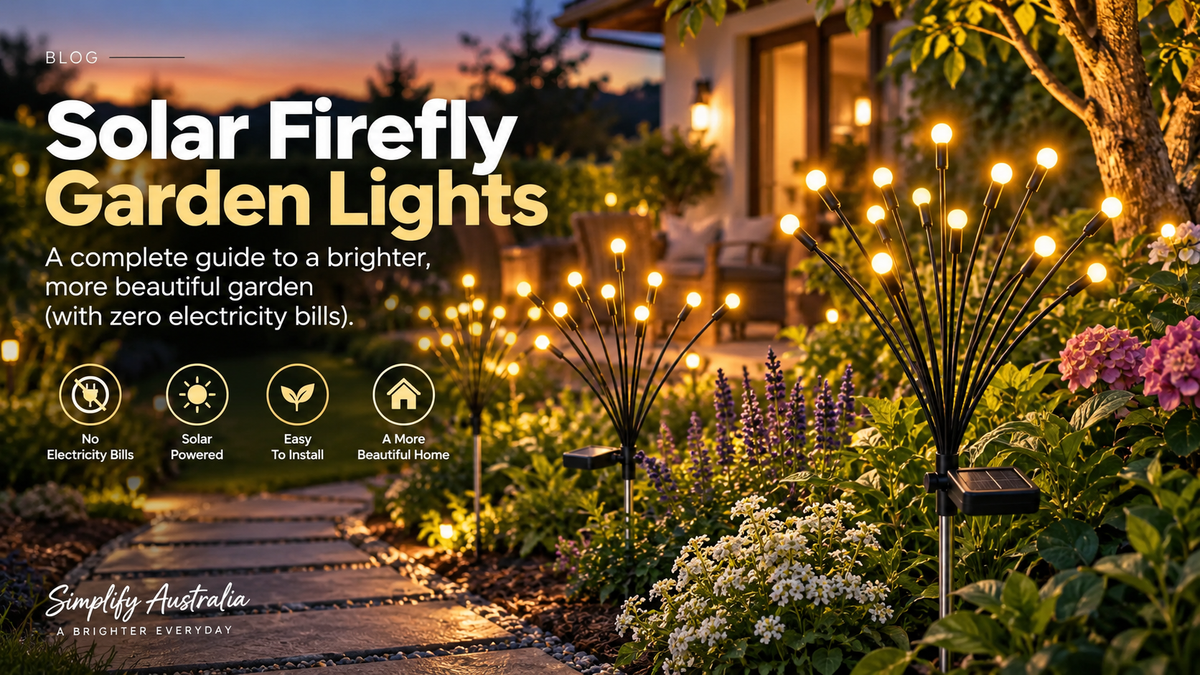
- NightGlow Solar Firefly Garden Lights — swaying firefly LED stems for garden beds and borders
- PillowPro Australian Made Contour Pillow — ergonomic cervical support for pain-free sleep
- ProCloud Australian Wool Pillow — natural wool for temperature-regulating comfort
- ProChef Titanium Cutting Board — the safest, most hygienic cutting board you can own
- TurboClean 9-in-1 Cordless Spin Scrubber — clean bathrooms, tiles, and grout in minutes
- ProLift Furniture Moving Set — move heavy furniture solo without scratching floors
- ProRoll Appliance Roller Set — slide fridges and washing machines out for cleaning
👉 Browse Australia's Leading Home & Travel Products
👉 Visit the Simplify Australia Homepage
Ready to Light Your Path Without a Single Wire?
No electrician. No cables. No power bill. The NightPath Solar Garden Ground Lights push into the ground, charge in the sun, and light your pathway automatically — every single night.
Shop the NightPath Solar Garden Ground Lights Now →
Or explore our full range of clever home and garden products at Simplify Australia.
Sources:
- Australian Government — Energy Rating — Data on household energy consumption including outdoor lighting and the benefits of switching to solar-powered alternatives.

Leave a comment
This site is protected by hCaptcha and the hCaptcha Privacy Policy and Terms of Service apply.