
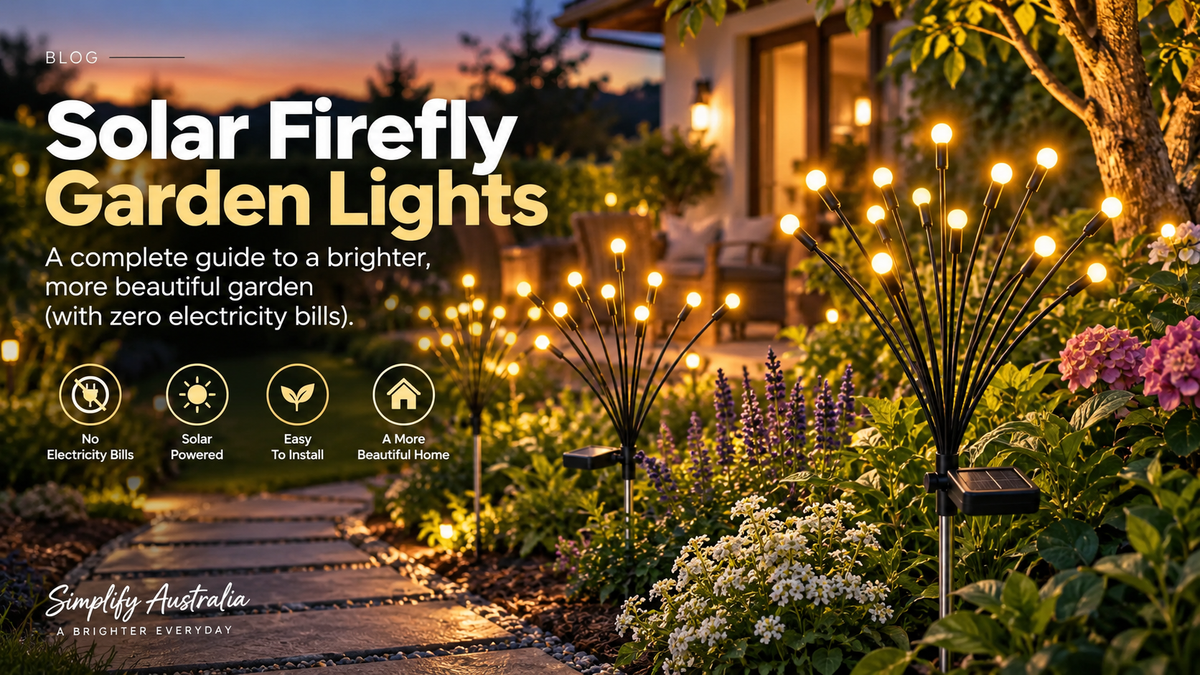
There's a moment every evening — just after sunset, when the sky is a deep blue and the air is starting to cool — when a well-lit garden becomes the best room in the house. Soft light filtering through flower beds. A warm glow lining the pathway. Tiny lights swaying gently in the breeze like actual fireflies.
That's the magic of solar firefly garden lights — and the best part is that none of it requires an electrician, a power bill, or a single metre of cable.
Solar garden lights have come a long way from the dim, short-lived plastic stakes of a decade ago. Modern solar lights use high-efficiency panels, long-lasting LED technology, and smart light sensors to deliver beautiful, reliable illumination night after night — powered entirely by the sun.
In this guide, we'll cover how solar lights work, which types suit which areas of your garden, how to place them for maximum impact, the mistakes that kill solar light performance, and why the NightGlow Solar Firefly Garden Lights from Simplify Australia have become one of our most loved outdoor products.
Why Solar Garden Lights Are the Smartest Outdoor Lighting Choice
Before we get into firefly lights specifically, it's worth understanding why solar outdoor lights have overtaken wired garden lighting as the go-to choice for Australian homeowners.
Zero Running Costs
Solar lights charge during the day and illuminate at night — powered entirely by sunlight. There's no electricity cost, no wiring to install, and no ongoing power draw. According to the Australian Government's Energy Rating website, outdoor lighting can contribute meaningfully to household electricity consumption — switching to solar eliminates that entirely.
No Electrician Required
Hardwired garden lighting requires a licensed electrician to install — at a cost of $200–$500+ depending on the complexity, before the lights themselves. Solar lights for garden use are completely self-contained: push them into the ground, let them charge, and they work from night one.
Completely Safe
No mains electricity in your garden means no risk of electrical shock from damaged cables, waterlogged connections, or exposed wiring. Solar outdoor lights are inherently safe — there's no electrical current running through the ground. This is especially important in gardens accessed by children and pets.
Flexible and Repositionable
Because there are no cables, you can place solar garden lights wherever you want — and move them whenever you want. Redesigning a flower bed? Shift the lights. Hosting a party and need more light on the patio? Grab a few stakes from the path and relocate them. Try doing that with hardwired fixtures.
Environmentally Friendly
Solar-powered lights generate zero emissions during operation. The energy source — sunlight — is free, renewable, and abundant in Australia, which receives some of the highest solar irradiance levels in the world.
What Are Solar Firefly Lights and How Do They Work?
Solar firefly lights are a style of solar garden light designed to mimic the look of fireflies — multiple tiny LED lights on thin, flexible wire stems that sway gently in the breeze. Unlike rigid solar stake lights (which produce a single point of light), firefly lights create a scattered, organic, almost living glow that moves with the wind.
The NightGlow Solar Firefly Garden Lights work like this:
- Solar panel charges during the day. A compact solar panel at the base absorbs sunlight and converts it into electrical energy, stored in a built-in rechargeable battery.
- Light sensor activates at dusk. An ambient light sensor detects when daylight fades and automatically switches the LEDs on — no manual switch, no timer to set.
- LEDs illuminate on flexible stems. Multiple warm-toned LEDs sit at the tips of thin, flexible wire branches. These branches sway in even the lightest breeze, creating a gentle, flickering effect that looks remarkably like fireflies hovering over a garden bed.
- Automatic shutoff at dawn. When daylight returns, the sensor switches the LEDs off and charging begins again.
The cycle is completely automatic. Once installed, firefly garden lights require zero daily interaction — they charge, illuminate, and reset every 24 hours on their own.

Where to Use Solar Firefly Lights (And Other Solar Styles)
Different areas of the garden call for different lighting styles. Here's a guide to matching the right solar lights to the right spot:
Flower Beds and Garden Borders
This is where solar firefly lights shine — literally. The swaying wire stems blend naturally among plants, creating the illusion of fireflies hovering over the flowers. Solar lights for flower beds work best when placed in clusters of 2–4 units for a natural, scattered effect rather than a rigid line.
Pathways and Walkways
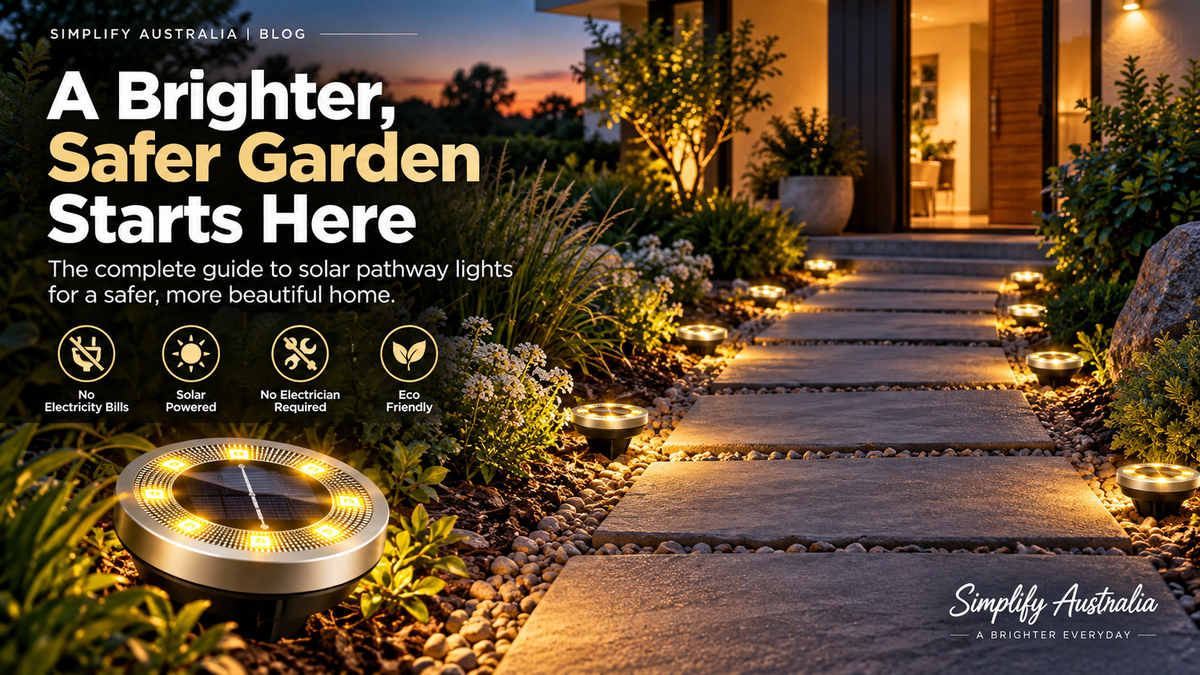
Solar pathway lights — typically stake-mounted with a downward-facing LED — are the classic choice for lining paths. They provide functional visibility and define the edges of a walkway. Space them 1.5–2 metres apart for consistent illumination.
Backyard and Entertaining Areas
For patios, decking, and outdoor dining spaces, solar string lights outdoor or solar fairy lights draped overhead create warm ambiance. Solar lights for backyard entertaining transform a basic outdoor space into something inviting without any permanent installation.
Trees and Pergolas
Garden fairy lights solar wrapped around tree trunks, threaded through branches, or draped across a pergola create stunning overhead canopy lighting. The solar panel can be positioned on a nearby surface or clipped to a branch that receives direct sunlight.
Front Yards and Entry Points
Decorative solar garden lights along a driveway, beside a front door, or flanking a gate add kerb appeal and welcome visitors with warm light. The NightGlow firefly style is particularly effective in front garden beds, creating a standout first impression.
Edges of Lawns and Driveways
Low-profile solar stake lights or ground-level solar flower lights mark boundaries and edges without obstructing mowing or foot traffic.
Step-by-Step: How to Get the Best Performance From Solar Garden Lights
Solar garden lights are simple to install, but placement and positioning make a significant difference to performance. Here's how to get the brightest, longest-lasting glow:
Step 1: Choose a Sun-Exposed Position for the Panel
This is the most important factor. The solar panel needs direct sunlight — ideally 6–8 hours per day — to fully charge the battery. A panel in shade (under a tree canopy, behind a fence, on the south side of the house) will produce a weak, short-lived glow.
For solar firefly garden lights where the panel is attached to the stake, position the unit so the panel faces north (in Australia, north-facing surfaces receive the most sunlight year-round).
Step 2: Clean the Solar Panel
Dust, pollen, bird droppings, and garden debris on the panel surface reduce charging efficiency. Wipe the panel with a damp cloth every few weeks — especially after windy or dusty days.
Step 3: Allow a Full Initial Charge
When you first install your lights, leave them in the sun for a full day (8+ hours) before expecting peak performance on the first night. The initial charge conditions the battery and establishes the charge cycle.
Step 4: Place Lights in Clusters for Impact
Single lights scattered randomly across a large garden look sparse. Grouping solar firefly lights in clusters of 2–4 in key areas — flower beds, either side of a path entrance, around a feature plant — creates concentrated pockets of warm light that are far more visually impactful.
Step 5: Adjust Height and Angle
For firefly-style lights, the wire stems should sit at roughly the same height as the surrounding plants — not towering above them. The effect is most convincing when the lights appear to float within the foliage, not above it.

6 Common Mistakes That Kill Solar Light Performance
Mistake 1: Placing Panels in Shade
The single biggest reason solar lights underperform is insufficient sunlight reaching the panel. Even partial shade — from a fence, wall, or overhanging tree — can reduce charging by 50% or more. Always position panels in full, direct sunlight.
Mistake 2: Expecting Winter Performance to Match Summer
Australian winters have shorter days and weaker sunlight, especially in southern states. Solar outdoor lights will illuminate for fewer hours in winter than in summer. This is normal — they're not broken, they're just receiving less charge. Position panels to capture maximum winter sun (north-facing, clear of shadows).
Mistake 3: Not Removing Protective Film
Many solar lights ship with a clear protective film over the solar panel. If you don't peel it off, the panel can't charge properly. Always check for and remove any film before installation.
Mistake 4: Installing on the South Side of the House
In Australia, south-facing areas receive the least direct sunlight. Installing solar lights for garden beds on the south side of a building or fence will result in poor charging and dim output. Prioritise north-facing, east-facing, or west-facing positions.
Mistake 5: Ignoring Battery Replacement
Solar lights use rechargeable batteries (typically AA NiMH or lithium) that degrade over 2–3 years of daily charge cycles. If your lights are dimming despite good panel exposure, the battery may need replacing — not the entire unit. Most quality solar garden lights have user-replaceable batteries.
Mistake 6: Using Near Existing Outdoor Lighting
The auto-on light sensor detects ambient darkness. If your solar lights are positioned near a porch light, street light, or security flood light, the sensor may think it's still daytime and fail to activate. Keep solar lights away from competing light sources.
Solar Firefly Lights vs. Other Solar Garden Light Styles
Here's how solar firefly lights compare to other popular styles:
Solar Stake Lights: Single LED on a rigid stake. Functional for path marking but no movement, no atmosphere. One point of light per unit. Best for pathways, not feature lighting.
Solar String Lights / Fairy Lights: Multiple LEDs on a long wire. Great for draping across pergolas, fences, and trees. Solar fairy lights create beautiful overhead ambiance but don't work as well at ground level in garden beds.
Solar Flower Lights: Decorative LED flowers on stakes. Eye-catching during the day as garden ornaments. Limited light output compared to other styles. More decoration than illumination.
Solar Lanterns: Enclosed LED in a decorative housing. Concentrated light, good for tabletops and hanging. Less suited to dispersing light across a garden bed.
Solar Firefly Lights: Multiple LEDs on thin, flexible wire stems that sway in the breeze. Scattered, organic glow that mimics real fireflies. Best for garden beds, borders, and feature plantings. The NightGlow Solar Firefly Garden Lights deliver the most natural, atmospheric effect of any style — which is why they've become one of the most popular outdoor decorative solar lights in our range.
Styling Ideas for Solar Firefly Lights
Here are some creative ways to use the NightGlow in your garden:
The cottage garden effect. Cluster 4–6 units through a mixed cottage-style garden bed — among lavender, roses, salvia, and daisies. The swaying stems blend naturally with the plants, creating a magical, lived-in glow.
The front entrance welcome. Place 2–3 units in the garden beds flanking your front door or gate. The gentle firefly glow welcomes visitors and adds kerb appeal that sets your home apart.
The water feature accent. Position firefly lights near a birdbath, small pond, or fountain. The reflected glow on water doubles the visual impact.
The entertaining border. Line the edge of a patio or outdoor dining area with firefly lights. They provide enough ambient light to set a mood without competing with candles or string lights above.
The memorial or feature tree. Place a cluster of firefly lights at the base of a special tree — a memorial planting, a feature Japanese maple, or a large established specimen. The upward glow through the canopy is stunning.

Who Is Buying Solar Firefly Garden Lights?
The NightGlow Solar Firefly Garden Lights appeal to a wide range of Australian garden lovers:
- Homeowners wanting to add ambiance without the cost and complexity of hardwired outdoor lighting
- Renters who can't install permanent fixtures but want a beautiful garden at night
- Entertainers who host outdoor dinners, parties, and barbecues and want atmospheric lighting
- Retirees and keen gardeners who spend time in the garden at dusk and enjoy the visual reward of their planting work
- Parents who want a safe, low-voltage lighting option in gardens accessed by children
- Property sellers looking to boost kerb appeal and evening presentation for inspections
- Gift buyers looking for a unique, beautiful, and practical garden gift
Browse Our Full Range of Home & Garden Products
The NightGlow Solar Firefly Garden Lights are part of our growing collection at Simplify Australia:
- PillowPro Australian Made Contour Pillow — ergonomic cervical support for pain-free sleep
- ProCloud Australian Wool Pillow — natural wool for temperature-regulating comfort
- EarthEase Organic Grounding Sheet — sleep grounded with silver thread and organic cotton
- ProChef Titanium Cutting Board — the safest, most hygienic cutting board you can own
- TurboClean 9-in-1 Cordless Spin Scrubber — clean bathrooms, tiles, and grout in minutes
- ProLift Furniture Moving Set — move heavy furniture solo without scratching floors
- ProRoll Appliance Roller Set — slide fridges and washing machines out for cleaning
👉 Browse Australia's Leading Home & Travel Products
👉 Visit the Simplify Australia Homepage
Ready to Bring Your Garden to Life After Dark?
No wiring. No electricity bills. No electrician. The NightGlow Solar Firefly Garden Lights charge in the sun, glow at dusk, and create a magical firefly effect that transforms any garden bed, pathway, or outdoor space.
Shop the NightGlow Solar Firefly Garden Lights Now →
Or explore our full range of clever home and garden products at Simplify Australia.
Sources:
- Australian Government — Energy Rating — Information on household energy consumption including outdoor lighting and the benefits of solar-powered alternatives.


Leave a comment
This site is protected by hCaptcha and the hCaptcha Privacy Policy and Terms of Service apply.