
Packing for a trip sounds easy enough. Clothes, toiletries, phone, passport, done.
Until you're halfway to the airport and suddenly wondering whether you packed your charger.
Or your passport.
Or that one thing you absolutely needed.
Whether you're heading overseas from Australia, taking a domestic holiday, planning a family getaway or escaping for a long weekend, having a reliable travel checklist can make the whole process much easier.
The trick is not to pack everything you own. It's to pack the things you'll actually need, organise them properly and prepare for the little travel problems that can turn into big annoyances.
From luggage and travel documents to electronics, toiletries and comfort essentials, this is the ultimate travel packing checklist for Australian travellers.
Before You Start Packing
Before pulling everything out of the wardrobe, take a few minutes to think about the trip itself.
Ask yourself:
- Where am I going?
- How long am I staying?
- What will the weather be like?
- What activities am I planning?
- Will I have access to laundry?
- Am I checking luggage or travelling with carry-on only?
- Am I travelling internationally or within Australia?
- Am I travelling with children?
- Am I likely to shop while I'm away?
These questions can dramatically change what you actually need to pack.
A week at a beach resort requires a very different suitcase from a winter trip through Tasmania. Likewise, an overseas holiday will require more preparation than a weekend road trip.
Once you know what your trip looks like, you can start building your packing list.
1. Travel Documents and Important Information
Let's start with the things you really don't want to forget.
For international travel, make sure you have your:
- Passport
- Visa or travel authorisation, if required
- Travel insurance details
- Flight confirmations
- Accommodation details
- Driving licence if you're hiring a car
- Emergency contact information
- Copies of important documents
It can also be useful to keep digital copies of important documents somewhere secure in case you lose the originals.
Keep Your Travel Documents Together
Instead of throwing your passport, cards, boarding pass and other documents into different pockets of your bag, keep them together.
The ProSafe RFID Travel Passport Wallet is designed to keep your passport, cards, cash and travel documents organised in one place. It also includes RFID-blocking protection and dedicated storage for cards, boarding passes and other travel essentials.
This can be particularly handy when you're moving through airports and need to access your documents quickly.
No more standing at security while frantically emptying your handbag.
2. Clothing: Pack for Your Actual Trip
Clothing can easily take up most of your suitcase, which is why it's worth planning outfits before you start packing.
Instead of packing one outfit for every possible situation, choose versatile pieces that can be worn in different combinations.
For a typical holiday, you might consider:
- Everyday tops
- Shorts or trousers
- Underwear
- Socks
- Sleepwear
- A light jumper or jacket
- Swimwear
- Comfortable walking clothes
- One smarter outfit if needed
- Weather-appropriate outerwear
Check the weather forecast before you leave, but remember that conditions can change.
If you're travelling around Australia, this is particularly important. The climate can vary dramatically between destinations, so think about the specific regions you're visiting rather than packing based solely on the season.
Don't Forget Comfortable Shoes
You might be tempted to bring several pairs of shoes, but they can take up valuable space.
For most trips, start with a comfortable pair that you'll actually wear.
Then add additional footwear only if you genuinely need it.
If you're heading somewhere warm, a pair of thongs or sandals can be useful. If you're planning hikes or lots of walking, prioritise practical footwear over fashion.
Your feet will thank you later.
3. Use Packing Cubes to Stay Organised
One of the easiest ways to make your suitcase feel more organised is to divide your clothing into sections.
ProPack Travel Compression Packing Cubes are designed to help travellers organise and compress their clothing, making them particularly useful when you're trying to make the most of limited suitcase space. Simplify Australia's travel range specifically positions these as a space-saving solution for more organised packing.
You can organise your cubes by:
- Tops
- Bottoms
- Underwear and socks
- Sleepwear
- Swimwear
- Kids' clothing
- Individual outfits
If you're travelling as a family, giving each person their own packing cube can make unpacking significantly easier.
Instead of opening a suitcase full of everyone's clothes, you can simply grab the cube belonging to each person.
4. Toiletries and Personal Care
Toiletries are another category that can quickly get out of control.
Before packing, check what your accommodation provides.
You may not need to bring full-size shampoo, conditioner or body wash if your hotel already supplies them.
For the things you do need, consider travel-sized containers where appropriate.
Your toiletries checklist might include:
- Toothbrush
- Toothpaste
- Deodorant
- Shampoo and conditioner
- Skincare
- Hairbrush or comb
- Razor
- Makeup
- Sunscreen
- Personal hygiene products
- Any regular medication
- Basic first-aid items
Keep Toiletries Organised
A dedicated toiletry bag makes a surprisingly big difference.
The ProPack Hanging Travel Toiletry Bag is designed to keep toiletries organised while travelling and can be hung up when you're getting ready.
This is particularly useful in smaller hotel bathrooms where bench space is limited.
It also means you don't have to scatter bottles and personal-care products across the bathroom every time you need to get ready.
5. Electronics and Chargers
Modern travel usually means travelling with a small collection of electronics.
Your list might include:
- Smartphone
- Phone charger
- Laptop or tablet
- Laptop charger
- Camera
- Camera charger
- Headphones
- Power bank
- Smartwatch and charger
- E-reader
- Other personal electronics
The challenge isn't necessarily remembering the devices.
It's remembering all the tiny cables that go with them.
Keep Your Tech in One Place
The ProTech Travel Gadget Accessory Organiser is designed to keep chargers, cables, power banks, earbuds and other accessories organised in dedicated compartments. Its compact design is intended for travel, work and everyday carry.
This can save you from the classic travel situation of digging through your bag for one charging cable while everything else comes tumbling out.
6. Don't Forget a Travel Adapter
If you're travelling overseas, check the power outlets used at your destination before you leave.
Australia uses Type I plugs, while many other countries use different outlet configurations.
The last thing you want is to arrive after a long flight and realise you can't charge your phone.
The ProCharge Universal Travel Adapter has four built-in plug types and is designed for use in 150+ countries. It includes USB-A, USB-C and AC charging options, allowing multiple devices to be powered from one compact adapter.
It's one of those things you might barely think about once it's packed, but you'll definitely notice if you don't have one.
Important: Always check the voltage requirements of your destination and your devices. A plug adapter changes the physical connection; it doesn't necessarily convert voltage.
7. Pack for the Australian Weather
If you're travelling within Australia, don't assume the weather will be predictable just because you're staying in the same country.
Australia covers a huge geographic area, so conditions can vary significantly.
Depending on where you're going, consider packing:
- Lightweight clothing
- Warm layers
- Rain jacket
- Hat
- Sunglasses
- Swimwear
- Comfortable walking shoes
- Sunscreen
- Insect repellent
- A light jumper
For beach holidays, a waterproof bag can be useful.
For unpredictable weather, an umbrella can earn its place in your luggage surprisingly quickly.
The WeatherPro UV Travel Umbrella & Case is designed as a compact travel umbrella that can be kept in your luggage or day bag without taking up too much space. It's part of Simplify Australia's current travel range.
8. Bring a Bag for Day Trips
Your main suitcase isn't going to be the only bag you'll need.
Once you've arrived, you'll probably want something smaller for:
- Sightseeing
- Shopping
- Day trips
- Beach visits
- Walking around cities
- Carrying snacks and water
- Keeping your phone and wallet close
A lightweight additional bag can be particularly useful because you don't want to carry your entire suitcase around with you.
The ProPack Lightweight Foldable Travel Bag folds down into a compact pouch when not in use and expands to provide additional storage when you need it. Simplify Australia lists it as a 35L lightweight travel option suitable for carry-on use and extra storage.
It can also be useful to keep one packed inside your main luggage as a backup for shopping or carrying extra items on the return journey.
9. Keep Your Valuables Secure
When you're travelling, especially through busy airports, public transport networks and tourist areas, it's worth being mindful of your belongings.
Keep your:
- Passport
- Phone
- Wallet
- Bank cards
- Cash
- Keys
- Important documents
somewhere secure and accessible.
A crossbody bag can be useful because it keeps your essentials close while leaving your hands free.
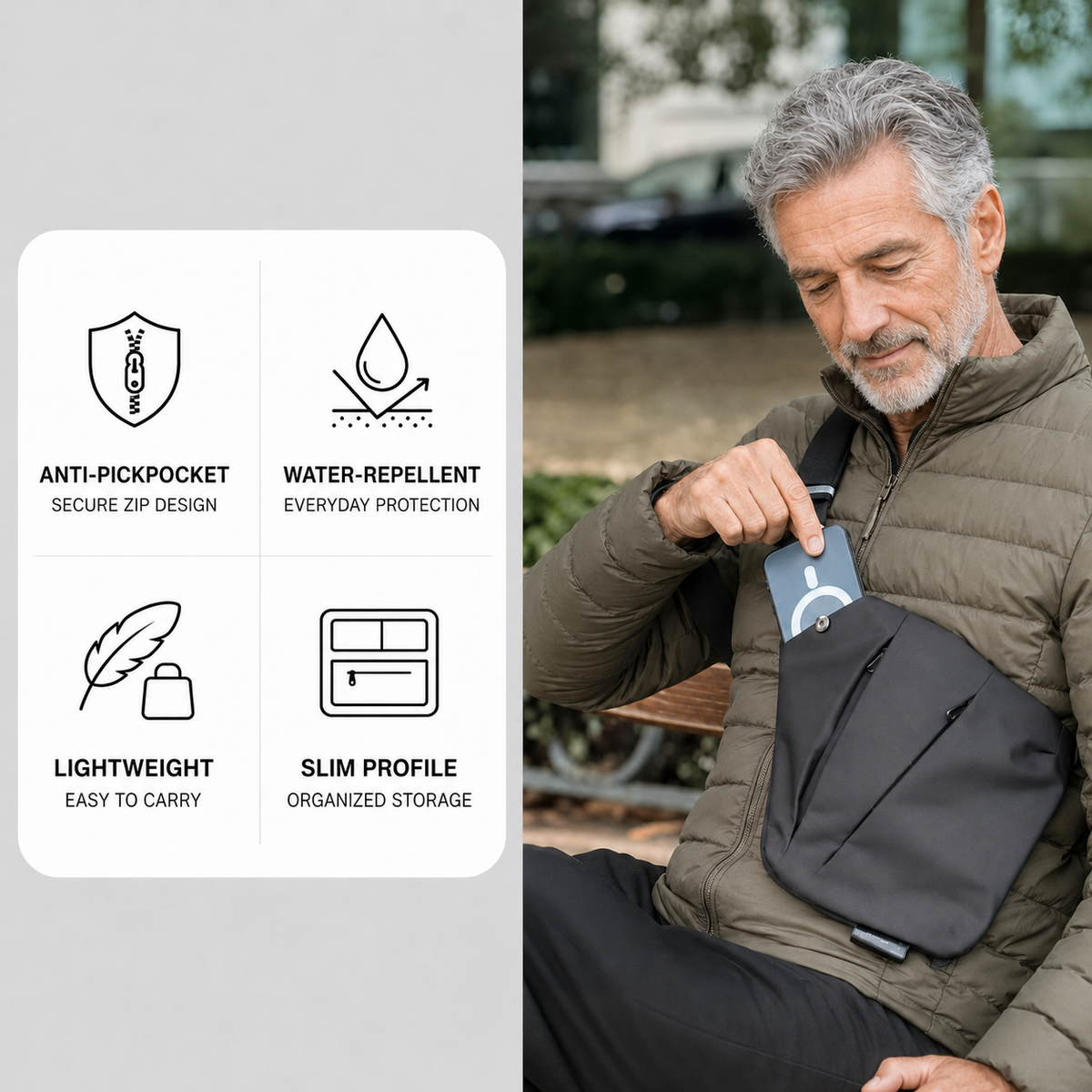
The ProSafe Anti-Theft Crossbody Bag features hidden zippers, RFID-blocking pockets, a water-resistant fabric and an adjustable strap. It's designed for carrying essentials while travelling, commuting and sightseeing.
You don't need to be paranoid while travelling. A few sensible habits and a well-organised bag can simply make it easier to keep track of your important belongings.
10. Prepare for Long Travel Days
A two-hour road trip and a 14-hour international flight require very different packing strategies.
For longer journeys, think about comfort as well as practicality.
Consider packing:
- Neck pillow
- Headphones
- Water bottle
- Entertainment
- Snacks
- Eye mask
- Comfortable layers
- Compression socks if appropriate for you
- Phone charger
- Travel documents
The ProRelief Memory Foam Travel Pillow is designed to provide additional neck support during travel and is compact enough to take on flights or road trips.
You don't have to pack an entire comfort kit.
Just think about what would make your journey more enjoyable and choose a few useful items.
11. Keep a Small Travel Essentials Kit
There are a few small things that are easy to forget but incredibly useful when you need them.
Consider adding:
- Tissues
- Hand sanitiser
- Wet wipes
- Plasters
- Basic medication
- Reusable shopping bag
- Pen
- Sunglasses
- Earplugs
- Small snacks
A small travel kit can live in your carry-on or handbag so you're not constantly moving these items between bags.
12. Check Your Luggage Weight
You've packed everything.
You've zipped the suitcase.
You're feeling organised.
Then you arrive at the airport and discover your bag is overweight.
Not ideal.
A digital luggage scale can help you avoid this problem before you leave home.
Simplify Australia's travel collection includes the ProWeigh Digital Luggage Scale, designed to help travellers check their luggage weight before heading to the airport.
It's particularly useful on the way home when you've added souvenirs, shopping or other purchases.
Leave yourself a little weight allowance rather than packing right up to the airline's maximum.
Your Ultimate Travel Packing Checklist
Here's the quick version to save before your next trip.
Travel documents
- Passport
- Visa or travel authorisation if required
- Travel insurance
- Flight details
- Accommodation details
- Driving licence
- Emergency contacts
- Copies of important documents
Clothing
- Tops
- Bottoms
- Underwear
- Socks
- Sleepwear
- Jacket or jumper
- Swimwear
- Weather-appropriate clothing
- Comfortable shoes
- Thongs or sandals if needed
Toiletries
- Toothbrush
- Toothpaste
- Deodorant
- Shampoo and conditioner
- Skincare
- Hair products
- Sunscreen
- Personal hygiene products
- Medication
- Basic first-aid supplies
Electronics
- Phone
- Phone charger
- Laptop/tablet
- Chargers
- Headphones
- Camera
- Power bank
- Travel adapter
Travel accessories
- Packing cubes
- Toiletry bag
- Passport wallet
- Day bag
- Neck pillow
- Luggage scale
- Travel umbrella
- Electronics organiser
Before leaving home
- Check the weather
- Check baggage allowance
- Weigh your suitcase
- Charge your electronics
- Download important travel documents
- Check passport expiry
- Confirm flights and accommodation
- Lock up the house
- Check you've packed your keys!
How to Pack Smarter, Not Just More
The best travel checklist isn't the one with the most items.
It's the one that helps you remember the right items.
A well-organised suitcase can make a huge difference to your trip. Packing cubes help separate your clothing, a dedicated toiletry bag keeps your bathroom essentials together, an electronics organiser stops cables from becoming a tangled mess and a passport wallet keeps important documents in one place.
Simplify Australia's travel range is built around these little conveniences, with products designed to make travelling lighter, more organised and less stressful.
For your next trip, start with your destination, plan around what you'll actually be doing and resist the temptation to pack for every possible scenario.
Then organise your essentials so they're easy to find when you need them.
Because the goal isn't to have the biggest suitcase.
It's to arrive at your destination thinking:
"I've got everything I need."
And preferably without sitting on your suitcase to get the zip closed.
Ready to get organised for your next adventure? Explore Simplify Australia's Leading Travel Products and find practical travel essentials designed to make every journey easier.
Frequently Asked Questions
What should I pack for a trip in Australia?
For most Australian holidays, start with versatile clothing, comfortable shoes, toiletries, sunscreen, a hat, weather-appropriate layers, electronics and travel documents. What you need will depend on your destination, season and planned activities.
What are the most important travel essentials?
The essentials include your passport and travel documents, phone and charger, medication, toiletries, suitable clothing, comfortable shoes and any destination-specific items you need.
How can I organise my suitcase better?
Packing cubes are one of the easiest ways to divide your suitcase into organised sections. You can separate clothes by type, outfit or family member, making everything easier to find.
Should I use packing cubes for travel?
Yes. Compression packing cubes can help organise clothing and make better use of suitcase space. They're particularly useful for family holidays and longer trips.
What should I keep in my carry-on?
Keep your passport, travel documents, valuables, medication, phone, chargers and anything essential for the journey in your carry-on rather than checked luggage.
Do I need a travel adapter when travelling overseas from Australia?
It depends on your destination. Many countries use different plug types from Australia, so check the outlet type before travelling. A universal travel adapter can be a convenient option for international trips.
How do I avoid overweight luggage?
Check your airline's baggage allowance before travelling and weigh your suitcase at home. A digital luggage scale can help you identify an overweight bag before you reach the airport.
How early should I start packing for a holiday?
For a short domestic trip, a few days may be enough. For an international holiday, starting a week or more ahead gives you time to check documents, organise travel essentials, review the weather and buy anything you're missing.
What should I pack for a long flight?
Focus on comfort and accessibility. A neck pillow, headphones, charger, water bottle, comfortable layers, entertainment and important travel documents can make a long journey much easier.
How can I avoid forgetting things when packing?
Use a checklist and pack by category rather than randomly placing items into your suitcase. Keep frequently used travel essentials together and tick each item off before you leave.

Leave a comment
This site is protected by hCaptcha and the hCaptcha Privacy Policy and Terms of Service apply.