
Moving a heavy piece of furniture sounds simple until you're standing in the middle of your living room trying to figure out how you're going to move a bulky sofa, cabinet or appliance without scratching the floor, damaging the furniture or putting your back through it.
Whether you're rearranging a room, moving house, cleaning underneath furniture or simply trying to get a fridge into a better position, heavy furniture can be surprisingly difficult to move safely.
The good news? You don't always need a team of people or professional movers for smaller household jobs.
With the right preparation, a little planning and the right furniture-moving tools, you can make many heavy-moving jobs considerably easier.
Here's how to move heavy furniture without damaging your floors, your furniture or yourself.
Before You Move Anything: Plan the Route
The biggest mistake people make is starting to push before thinking about where the furniture actually needs to go.
Before you move anything, work out the complete route.
Measure:
- The furniture
- Doorways
- Hallways
- Tight corners
- Stairways
- The final location
Remember that furniture doesn't always need to travel in a straight line.
A large cabinet might fit through a doorway when tilted slightly, while a sofa may need to be turned on its side.
Planning the route first can save you from getting halfway through a move and discovering that the furniture won't fit through the next doorway.
Clear the Path
Remove anything that could get in the way.
Move:
- Rugs
- Small tables
- Chairs
- Plants
- Toys
- Decorative items
- Boxes
- Other furniture
You want a clear path from the starting point to the destination.
This is particularly important when moving something heavy because you don't want to be trying to navigate around obstacles while also controlling a large piece of furniture.
1. Empty the Furniture First
Before moving a heavy item, remove anything you can.
Take books out of bookcases.
Remove dishes from cabinets.
Empty drawers.
Take food out of appliances.
Remove cushions from sofas.
Even if the contents don't seem particularly heavy, removing them can make the furniture easier to handle and safer to move.
It also prevents objects inside drawers and cupboards from shifting or falling while you're moving the item.
Remove Removable Parts
If possible, remove things such as:
- Shelves
- Drawers
- Legs
- Doors
- Cushions
- Detachable components
You don't necessarily need to completely dismantle the furniture.
The goal is simply to reduce unnecessary weight and make the item easier to control.
2. Protect Your Floors Before You Start
One of the biggest concerns when moving furniture is floor damage.
Hard flooring can be scratched by furniture legs, wheels or trapped dirt underneath an item.
Even carpet can be damaged if a heavy piece is dragged across it.
Before you start, consider what type of flooring you're working with.
Timber and Laminate Floors
These surfaces can be particularly vulnerable to scratches and scuffs.
Avoid dragging furniture directly across the floor wherever possible.
Tiles
Tiles are durable, but dragging heavy furniture across them can still cause scratches or damage, particularly if dirt or grit becomes trapped underneath.
Carpet
Heavy furniture can catch in carpet fibres or leave noticeable marks.
Using suitable moving equipment can make the process much easier.
The important thing is to avoid the temptation to simply push or drag everything across the floor.
3. Use a Furniture Moving Set
If you're regularly moving heavy furniture around your home, having the right tool can make a huge difference.
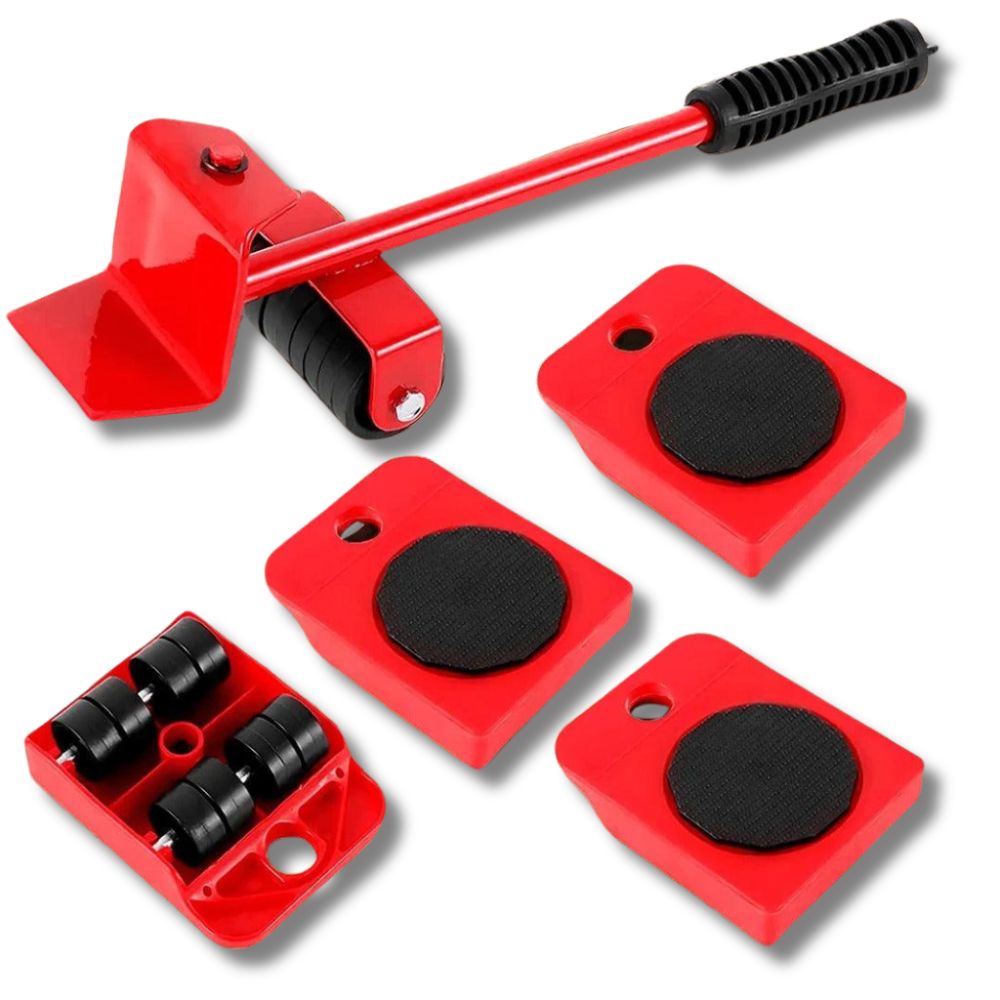
The ProLift Furniture Moving Set is designed to help lift and move heavy household furniture more easily.
Rather than relying entirely on your own strength, a furniture-moving set can give you additional leverage and make it easier to position moving pads or sliders underneath the furniture.
This is particularly useful for items such as:
- Sofas
- Beds
- Cabinets
- Tables
- Bookcases
- Cupboards
- Other heavy household furniture
The benefit isn't just convenience.
Using the right equipment can also reduce the temptation to drag furniture across your floor.
And that's important when you're trying to avoid scratches and marks.
4. Lift Instead of Dragging
Dragging is often the easiest thing to do in the moment.
It's also one of the easiest ways to damage your floor.
Whenever possible, lift the furniture slightly before positioning moving equipment underneath it.
This is where leverage becomes useful.
Instead of trying to lift the entire piece at once, use the appropriate moving tool to raise one side enough to position a slider or moving pad underneath.
Then repeat on the other side.
You don't need to completely lift the furniture off the ground.
You only need enough clearance to get the moving equipment underneath it.
Don't Try to Lift Everything Yourself
A heavy cabinet might look manageable.
Then you try to lift it and immediately regret your decision.
If something is too heavy for one person, get help.
It's much better to spend an extra minute finding another person than to risk dropping furniture or injuring yourself.
5. Move Heavy Appliances Differently
Furniture isn't the only thing that can be difficult to move.
Large appliances can be even more challenging because they're often extremely heavy and awkwardly shaped.
Think:
- Refrigerators
- Washing machines
- Dryers
- Dishwashers
- Freezers
- Large ovens
You generally don't want to drag these directly across your floor.
A dedicated appliance-moving tool can make these jobs considerably easier.
The ProRoll Appliance Roller Set is designed to help move heavy appliances while making it easier to reposition them around the home.
It's particularly useful when you need to move an appliance for:
- Cleaning
- Renovations
- Installation
- Maintenance
- Rearranging your kitchen or laundry
Before moving any appliance, disconnect it safely and follow the manufacturer's instructions.
For appliances connected to gas, water or other services, make sure they're properly disconnected by an appropriately qualified professional where required.
6. Check What's Underneath the Furniture
Before moving anything, inspect underneath it.
You may find:
- Dust
- Dirt
- Hair
- Small stones
- Broken objects
- Other debris
This matters because even a tiny piece of grit trapped underneath furniture can act like sandpaper when the furniture moves across your floor.
Vacuum or sweep around the furniture before you start whenever possible.
Once the furniture is raised, take another look at the floor and the base of the furniture.
Remove anything that could scratch the surface.
7. Move Slowly
When moving something heavy, faster isn't better.
Move slowly and communicate with anyone helping you.
If you're moving a large piece with another person, agree on simple instructions such as:
"Ready?"
"Lift."
"Move."
"Stop."
This might sound overly organised, but it can prevent sudden movements.
One person pushing while the other isn't ready can cause the furniture to shift unexpectedly.
Slow movements also give you more control when navigating corners and doorways.
8. Protect Corners and Door Frames
Furniture doesn't just damage floors.
Large items can easily hit walls, door frames and corners during a move.
If you're moving something bulky through a tight space, protect vulnerable areas where possible.
Furniture blankets, protective padding or similar materials can help reduce the chance of accidental bumps and marks.
Take your time around doorways.
Don't try to force a piece of furniture through a space that's clearly too small.
If the furniture doesn't fit, stop and rethink the angle.
Sometimes rotating or tilting the item can solve the problem.
Other times, you may need to partially dismantle it.
9. Think About the Furniture's Centre of Gravity
Large furniture isn't always heavy in the way you'd expect.
A tall cabinet, for example, may be relatively light at the bottom but significantly heavier towards the top.
That can make it unstable when moving.
Before moving a tall or top-heavy piece, consider where its weight is concentrated.
Keep it as stable and upright as possible.
If you're moving something tall, make sure everyone involved knows how it should be handled.
And never assume that because something is on wheels, it can't tip.
10. Be Careful With Furniture on Wheels
Wheels can make furniture easier to move, but they don't automatically make it safe.
If you're moving something with wheels:
-
Check that the wheels are in good condition
-
Make sure the path is clear
-
Move slowly
-
Avoid sudden turns
-
Keep hands clear of pinch points
-
Don't exceed the equipment's recommended capacity
A small wheel catching on a floor transition can bring a heavy item to an abrupt stop.
That can be dangerous for both the person moving it and the furniture itself.
11. Use the Right Equipment for the Job
There's a big difference between moving a lightweight side table and moving a fully loaded cabinet.
Don't use the same method for everything.
For smaller pieces, you may be able to lift and reposition them safely.
For heavier items, a furniture moving set can provide leverage.
For large appliances, an appliance-moving tool may be more appropriate.
The ProLift Furniture Moving Set and ProRoll Appliance Roller Set are both designed around specific household moving problems, helping reduce the need to manually drag heavy items across the floor.
Choosing equipment based on the job can make the whole process easier.
How to Move a Heavy Sofa
Sofas can be particularly awkward because they're wide, bulky and difficult to grip.
Before moving one:
Step 1: Remove the cushions
This reduces weight and makes the sofa easier to handle.
Step 2: Check the legs
If they're removable, take them off.
Step 3: Measure the doorway
Don't assume it will fit.
Step 4: Protect the floor
Use appropriate moving equipment rather than dragging it.
Step 5: Tilt if necessary
Depending on the shape of the sofa and doorway, you may need to turn it onto its side.
Step 6: Move slowly
Take your time around corners and doorways.
Step 7: Reassemble
Once it's in place, reinstall the legs and cushions.
How to Move a Heavy Cabinet
Cabinets require a little extra care because they're often tall and can become unstable.
Start by removing everything inside.
Then remove shelves and drawers if possible.
If the cabinet is attached to a wall, make sure it is properly detached before attempting to move it.
Use appropriate lifting equipment to raise the cabinet enough to position moving pads or sliders underneath.
Keep the cabinet stable and avoid sudden movements.
If it's particularly tall or heavy, get another person to help.
How to Move a Fridge or Other Appliance
Moving a fridge requires additional preparation.
Before you start:
-
Remove food and shelves where appropriate.
-
Disconnect the appliance safely.
-
Secure doors if necessary.
-
Clear the route.
-
Protect the floor.
-
Use suitable appliance-moving equipment.
-
Move slowly.
-
Keep the appliance stable.
For refrigerators and other large appliances, follow the manufacturer's instructions regarding moving and repositioning.
Some appliances may need to remain upright or require specific precautions after being moved.
When in doubt, check the manufacturer's guidance before switching the appliance back on.
What Not to Do When Moving Heavy Furniture
Knowing what not to do can be just as important.
Don't drag heavy furniture directly across the floor
This can cause scratches and scuffs.
Don't move furniture without clearing the path
An unexpected obstacle can cause a trip or sudden stop.
Don't try to lift something that's clearly too heavy
Get help or use appropriate equipment.
Don't rush
Heavy furniture can cause serious injuries if it shifts unexpectedly.
Don't ignore the weight distribution
Tall or top-heavy furniture can tip.
Don't forget what's underneath
Dust, dirt and grit can scratch flooring.
Don't assume wheels solve everything
Wheeled equipment still needs to be used correctly and within its limits.
A Simple Heavy Furniture Moving Checklist
Before moving a heavy item, run through this checklist:
-
Measure the furniture
-
Measure doorways and tight spaces
-
Clear the route
-
Remove items from inside
-
Remove detachable parts
-
Inspect underneath the furniture
-
Clean the floor
-
Protect vulnerable flooring
-
Choose the appropriate moving equipment
-
Get help if required
-
Plan your lifting points
-
Move slowly
-
Check corners and door frames
-
Recheck the furniture once it's in position
A few minutes of preparation can save you from hours of dealing with scratches, dents or damaged furniture.
Make Moving Heavy Things Around the Home Easier
You don't need to be moving house to find yourself needing to move something heavy.
Maybe you're finally cleaning underneath the fridge.
Maybe you're rearranging the living room.
Maybe you're renovating.
Maybe the sofa needs to move three metres to the left because you've decided the room will look better that way.
Whatever the reason, heavy furniture doesn't need to become a battle of strength.
The right preparation and equipment can make these jobs much easier while helping protect your floors.
Simplify Australia's ProLift Furniture Moving Set is designed for moving heavy furniture around the home, while the ProRoll Appliance Roller Set provides a practical option for repositioning heavy household appliances.
The key is to lift rather than drag, plan rather than push blindly, and use the right equipment for the job.
Your floors — and your back — will probably thank you.
Frequently Asked Questions
What is the easiest way to move heavy furniture?
Using appropriate furniture-moving equipment can make heavy items easier to lift and reposition. Clear the route first, remove unnecessary weight and get help when needed.
How do I move heavy furniture without scratching the floor?
Avoid dragging furniture directly across the floor. Use suitable moving pads, sliders or furniture-moving equipment and make sure the area underneath the furniture is free from dirt and grit.
Can I move heavy furniture by myself?
Some smaller or moderately heavy items may be possible to move alone with suitable equipment. However, large, heavy or awkward furniture should generally be moved with another person to reduce the risk of injury or damage.
How do you move a heavy fridge without damaging the floor?
Empty and safely disconnect the fridge, clear the route and use suitable appliance-moving equipment. Move it slowly and follow the manufacturer's instructions for transporting and repositioning the appliance.
How do I move a heavy sofa through a doorway?
Remove cushions and detachable parts first, measure the doorway and consider rotating or tilting the sofa if necessary. Get help with larger sofas and avoid dragging them directly across the floor.
How can I protect timber floors when moving furniture?
Avoid dragging furniture directly over timber flooring. Use suitable moving equipment and make sure there is no dirt or grit underneath the furniture that could scratch the surface.
Should I empty furniture before moving it?
Yes. Removing books, dishes, clothing and other contents reduces the weight and makes furniture easier to control. It can also prevent items inside from shifting or falling.
How do I move furniture without damaging the walls?
Measure doorways and plan the route before moving. Move slowly around corners and use protective padding where appropriate to help prevent accidental impacts against walls and door frames.
Is a furniture moving set worth having at home?
For anyone who regularly rearranges furniture, cleans underneath heavy items or tackles DIY projects, a furniture-moving set can be a useful addition to a home toolkit. It can provide leverage and make heavy items easier to reposition.


Leave a comment
This site is protected by hCaptcha and the hCaptcha Privacy Policy and Terms of Service apply.