
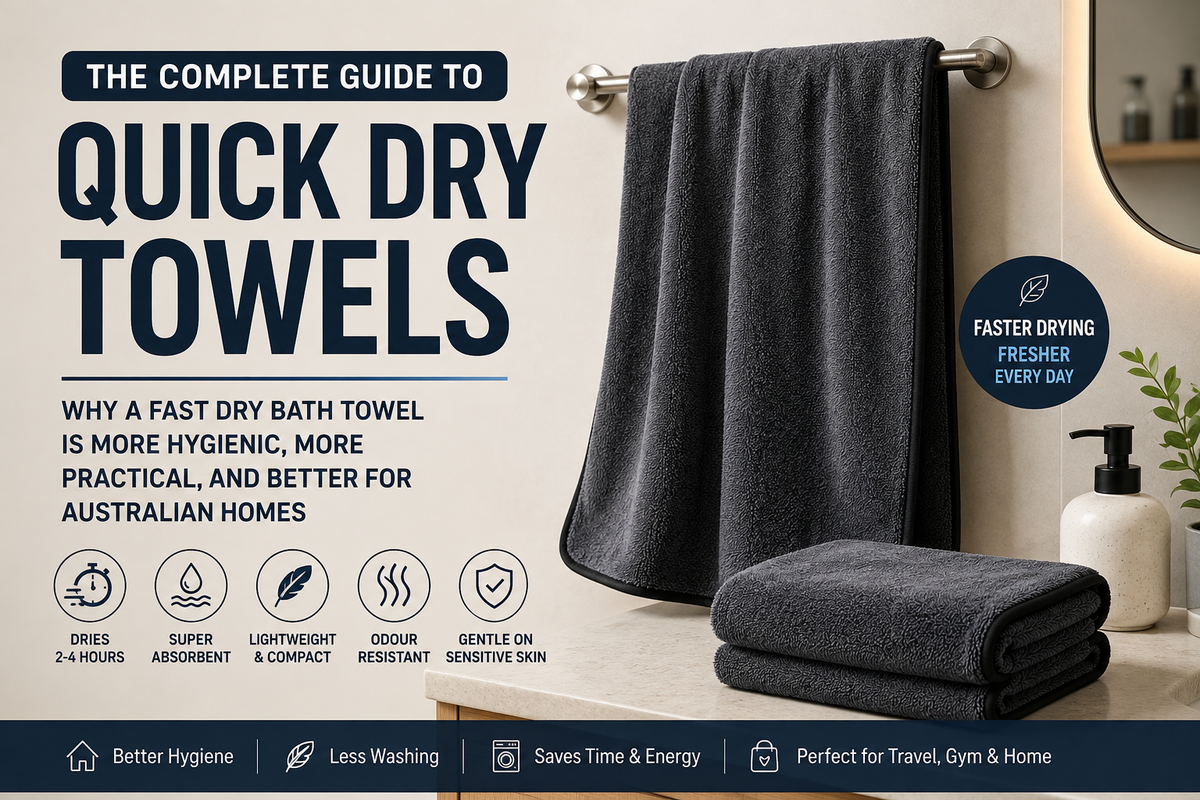
Here's something nobody talks about: your bath towel is probably the dirtiest thing in your bathroom — and it's the thing you rub all over your clean body every single day.
A traditional cotton bath towel takes anywhere from 8 to 24 hours to dry fully after a single use. In a humid bathroom with poor ventilation — which describes most Australian bathrooms — it can take even longer. During that time, the damp, warm fibres become a breeding ground for bacteria, mould, and mildew. That musty smell your towel develops after a few days? That's not just unpleasant — it's microbial growth.
The fix isn't washing your towels more often (although that helps). The fix is switching to a towel that doesn't stay wet long enough for bacteria to thrive. A quick dry towel made from microfibre dries in a fraction of the time, stays fresher between washes, and outperforms traditional cotton in almost every way that matters for modern Australian living.
In this guide, we'll break down the science behind towel drying time, explain why it affects hygiene more than most people realise, and show you why the FastDry Drying Towel from Simplify Australia has become one of our fastest-growing bathroom products.
The Problem With Traditional Cotton Bath Towels
Cotton has been the default bath towel material for over a century. It's soft, absorbent, and familiar. But cotton also has fundamental properties that make it poorly suited to the humid, warm, poorly ventilated bathrooms found in most Australian homes.
They Take Too Long to Dry
Cotton fibres are hydrophilic — they love water. A standard cotton bath towel absorbs well, but it also holds onto that moisture stubbornly. In a bathroom without a window or with limited airflow, a wet cotton towel can remain damp for 12–24 hours. According to Health Direct Australia, damp household textiles are a recognised source of bacterial and fungal growth, and towels that don't dry between uses should be washed more frequently to reduce microbial risk.
A fast drying towel made from microfibre releases moisture much faster. Where a cotton towel is still damp after 8 hours, a microfibre equivalent can be dry in 2–4 hours — even in a bathroom with average ventilation.
They Get Heavy When Wet
A standard cotton bath towel can weigh 600–900 grams dry. Wet, it can double in weight. That extra weight makes it harder to wring out, harder to hang properly, and slower to dry on the rack. A lightweight bath towel made from microfibre weighs significantly less — both dry and wet — which means faster drying and easier handling.
They Develop Odour Quickly
The musty smell that cotton towels develop after 2–3 uses is caused by bacteria and mildew colonising the damp fibres. The longer a towel stays wet, the faster this happens. Most Australians wash bath towels every 3–4 uses, but in humid climates (Queensland, Northern Territory, coastal NSW), odour can develop after just two uses. A quick drying towel that dries in hours rather than half a day dramatically reduces the window for microbial growth.
They Take Up Space
Thick, fluffy cotton towels are bulky — they fill bathroom racks, take up significant wardrobe space, and are heavy to pack for travel, gym, or camping. A compact bath towel made from microfibre folds to a fraction of the size while still delivering full-body coverage and absorbency.
What Makes a Quick Dry Towel Different?
A quick dry towel is typically made from microfibre — ultra-fine synthetic fibres that are split at a microscopic level to create an enormous surface area per strand. This engineering gives microfibre two properties that cotton can't match:
Faster Absorption
Microfibre absorbs water through capillary action — the split fibres wick moisture away from your skin rapidly on contact. A high-quality microfibre bath towel can absorb several times its own weight in water, and it does so faster than cotton. You feel drier quicker after stepping out of the shower.
Faster Release
Here's the critical difference: microfibre doesn't just absorb fast — it releases moisture fast too. The same capillary structure that wicks water from your skin also exposes it to air across thousands of micro-channels, allowing evaporation to happen much more quickly than in a dense cotton weave. This is why a fast drying bath towel can go from soaking wet to completely dry in 2–4 hours while a cotton towel is still damp.
The FastDry Drying Towel uses advanced microfibre technology engineered specifically for rapid drying. It absorbs instantly on contact, feels soft against the skin, and dries on the rack dramatically faster than any cotton towel.

Quick Dry Towel vs. Cotton Bath Towel: The Full Comparison
Here's how a quick dry microfibre towel compares to a traditional cotton bath towel across every metric that matters:
| Feature | Quick Dry Microfibre | Traditional Cotton |
|---|---|---|
| Drying time (on rack) | 2–4 hours | 8–24 hours |
| Absorption speed | Instant wicking | Gradual soaking |
| Weight (dry) | Lightweight | Heavy (600–900g) |
| Weight (wet) | Stays light | Doubles in weight |
| Odour resistance | High — dries before bacteria grow | Low — musty within 2–3 uses |
| Packed size | Compact — fraction of cotton | Bulky |
| Wash frequency needed | Every 4–5 uses | Every 2–3 uses |
| Dryer time | Minimal or air dry only | 60–90 minute cycle |
| Travel-friendly | ✅ Packs small, dries fast | ❌ Heavy, slow to dry |
| Durability | Maintains performance for years | Loses softness and absorbency |
The comparison makes it clear: a microfiber bath towel outperforms cotton in nearly every practical category — especially for Australian conditions where humidity and bathroom ventilation are constant challenges.
Step-by-Step: Getting the Best Performance From Your Quick Dry Towel
A quick dry bath towel works best when you use and care for it properly:
Step 1: Pat, Don't Rub
Microfibre absorbs on contact — you don't need to scrub it across your skin the way you might with a cotton towel. Pat or press the towel against your body, and the fibres will wick moisture instantly. This is also gentler on your skin, which is a bonus for anyone with sensitive or eczema-prone skin.
Step 2: Hang Fully Open
After use, hang the towel so it's fully spread — not bunched, folded, or draped in layers. Maximum air exposure means maximum drying speed. A single towel rail or hook where the towel can hang flat is ideal.
Step 3: Ensure Airflow
If your bathroom has a window, crack it open after showering. If not, leave the bathroom door open or run the exhaust fan for 20–30 minutes. Even a fast drying towel will dry slower in a sealed, steam-filled room.
Step 4: Wash Correctly
Machine wash in cold or warm water with a mild liquid detergent. Never use fabric softener — it coats microfibre strands and reduces absorbency. Wash separately from cotton items, which shed lint that embeds in microfibre. Air dry or tumble dry on low heat.
Step 5: Rotate Two Towels
For best hygiene, keep two quick dry towels in rotation — use one while the other hangs fully dry. With microfibre's fast drying time, a daily rotation is easy to maintain and keeps both towels fresh for longer.

5 Common Bath Towel Mistakes Australians Make
Mistake 1: Reusing a Towel That's Still Damp
If your towel from yesterday's shower is still damp when you reach for it today, you're drying yourself with a towel that's been hosting bacteria for 24 hours. A quick drying towel solves this by being dry within hours — but if your towel is still damp at next use, it needs better airflow or it needs washing.
Mistake 2: Washing With Fabric Softener
Fabric softener leaves a waxy coating on fibres that reduces absorbency in both cotton and microfibre towels. It also traps odours rather than removing them. Skip it entirely for towels — they'll actually feel softer and absorb better without it.
Mistake 3: Overloading the Towel Rack
Stacking three or four towels on a single rail means none of them dry properly. Each towel presses against the others, trapping moisture and creating the perfect environment for mildew. Give every towel its own hanging space.
Mistake 4: Not Washing Towels Often Enough
Dermatologists generally recommend washing bath towels after every 3 uses maximum — more frequently in humid climates. With a fast drying bath towel that resists odour buildup, you get a longer window between washes, but don't push it beyond 4–5 uses.
Mistake 5: Using the Dryer on High Heat
High dryer heat damages both cotton and microfibre fibres over time, reducing softness and absorbency. Air drying is ideal for microfibre. If you use a dryer, tumble on low. One of the benefits of a quick dry towel is that it often doesn't need the dryer at all — it air dries fast enough to be ready for next use.
Who Is Switching to Quick Dry Towels?
The FastDry Drying Towel appeals to a wide range of Australians who've outgrown the limitations of traditional cotton:
People in humid climates. If you live in Brisbane, Cairns, Darwin, or anywhere along the tropical and subtropical coast, your bathroom humidity is working against cotton towels. A quick dry towel that dries in 2–4 hours instead of 12+ is a game-changer.
Apartment dwellers with small bathrooms. Poor ventilation and limited hanging space mean towels dry slowly in most apartments. A fast drying towel that doesn't need all-day airflow to be ready for next use is essential.
Gym-goers and swimmers. A compact bath towel that dries fast, packs small, and doesn't develop odour in a gym bag is worth its weight in gold compared to lugging around a damp cotton towel.
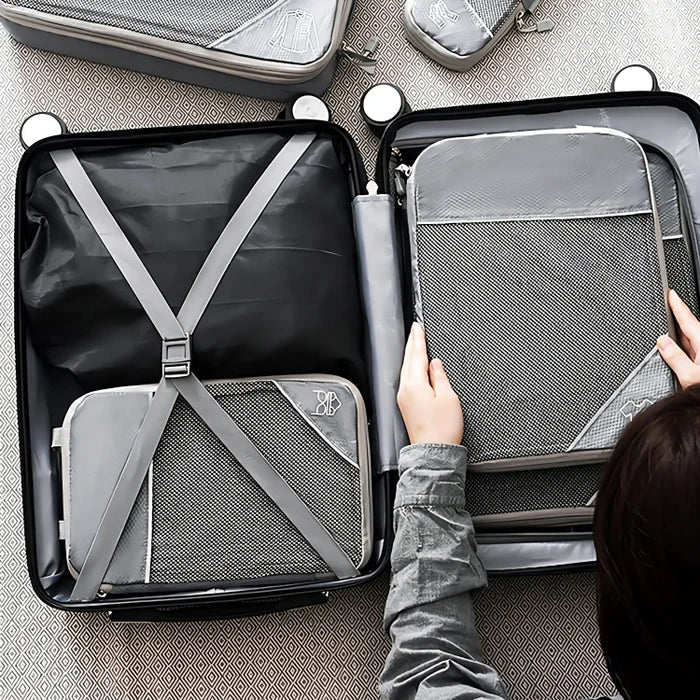
Travellers and campers. Backpackers, caravan travellers, and campers need towels that dry quickly in variable conditions and pack down small. A quick dry microfibre towel ticks every box.
Families with kids. Kids use towels chaotically — they drop them on the floor, bunch them on hooks, and forget they exist. A towel that dries fast even when handled badly stays fresher longer between washes.
Eco-conscious Australians. Fewer washes means less water, less energy, and less detergent. A quick dry bath towel that stays fresh for 4–5 uses instead of 2 cuts your towel laundry nearly in half.
People with sensitive skin. The pat-dry action of microfibre is gentler than the rubbing required with cotton. Less friction means less irritation — especially for eczema, dermatitis, and sun-sensitive skin.
What Makes the FastDry the Best Quick Dry Towel in Australia?
We stock a wide range of home and lifestyle products at Simplify Australia, and the FastDry Drying Towel has quickly become one of our best-reviewed products. Here's why:
- Ultra-fast drying — ready to reuse in a fraction of the time of cotton
- Super absorbent microfibre — wicks moisture on contact
- Lightweight and compact — packs down small for gym, travel, and camping
- Odour-resistant — stays fresher between washes thanks to rapid drying
- Soft on skin — gentle enough for sensitive and allergy-prone skin
- Machine washable — easy care, no special treatment needed
- Durable — maintains absorbency and softness through hundreds of washes
Whether you're searching for a soft quick dry towel, an ultra absorbent towel, a microfibre bath towel, or a fast drying bath towel — the FastDry delivers on every front.

Browse Our Full Range of Home Products
The FastDry Drying Towel is part of our growing collection of practical, everyday products at Simplify Australia:
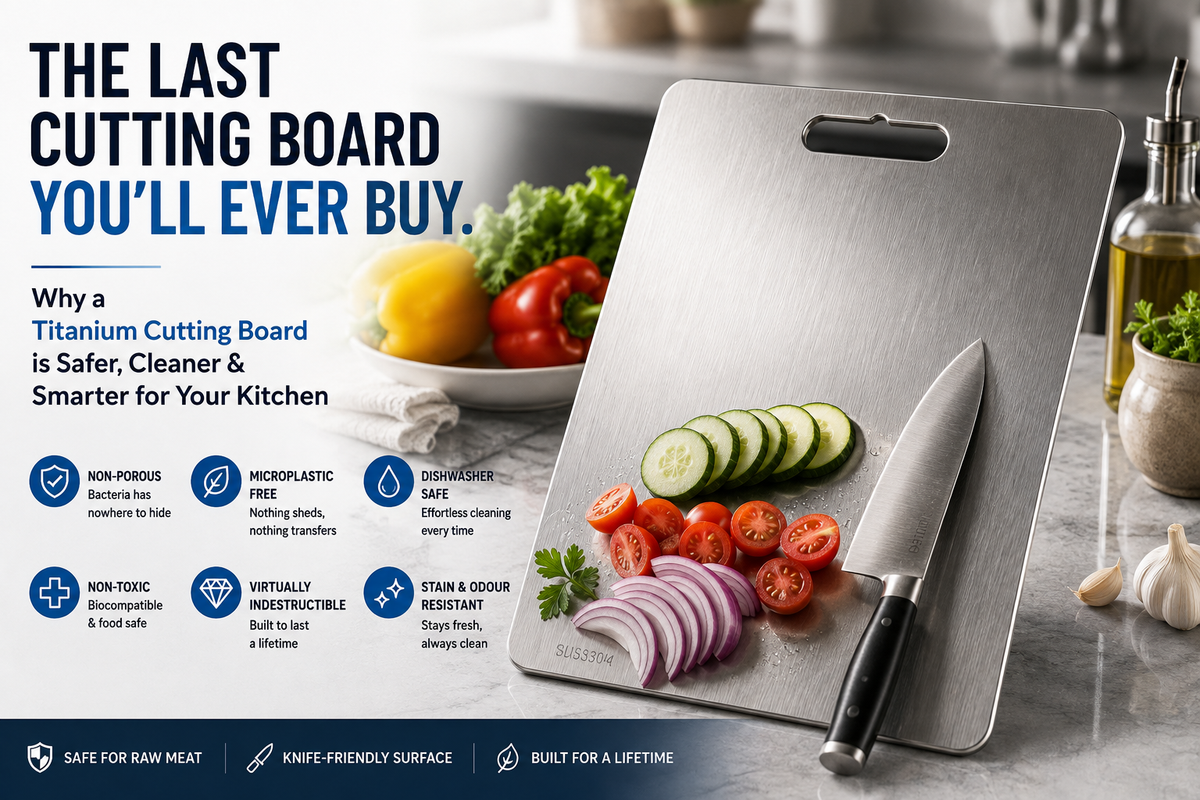
- ProChef Titanium Cutting Board — the safest, most hygienic cutting board you can own
- ProHeat Rollable Food Warming Mat — keep every dish at serving temperature
- ProRack Rolling Egg Organiser — automatic FIFO egg storage for your fridge
- TurboClean 9-in-1 Cordless Spin Scrubber — clean bathrooms, tiles, and grout in minutes
- DustPro Blind Cleaner — clean both sides of every blind slat in one pass
- ProDust Ceiling Fan Cleaner — clean every fan blade without a ladder
- ProLift Furniture Moving Set — move heavy furniture solo without scratching floors
👉 Browse Australia's Leading Home & Travel Products
👉 Visit the Simplify Australia Homepage
Ready to Ditch Damp, Musty Towels for Good?
No more musty smells. No more heavy, soggy towels on the rack. No more washing towels every two days just to keep them fresh. The FastDry Drying Towel dries in hours, stays fresh for days, and packs down small enough to take anywhere.
Shop the FastDry Drying Towel Now →
Or explore our full range of clever home products at Simplify Australia.
Sources:
- Health Direct Australia — Guidance on household textile hygiene and the link between damp towels and bacterial and fungal growth.

Leave a comment
This site is protected by hCaptcha and the hCaptcha Privacy Policy and Terms of Service apply.